
The Fall Home Maintenance Checklist That Matters
Most seasonal checklists are twenty jobs of equal weight. Four of them prevent real damage; the rest are housekeeping.
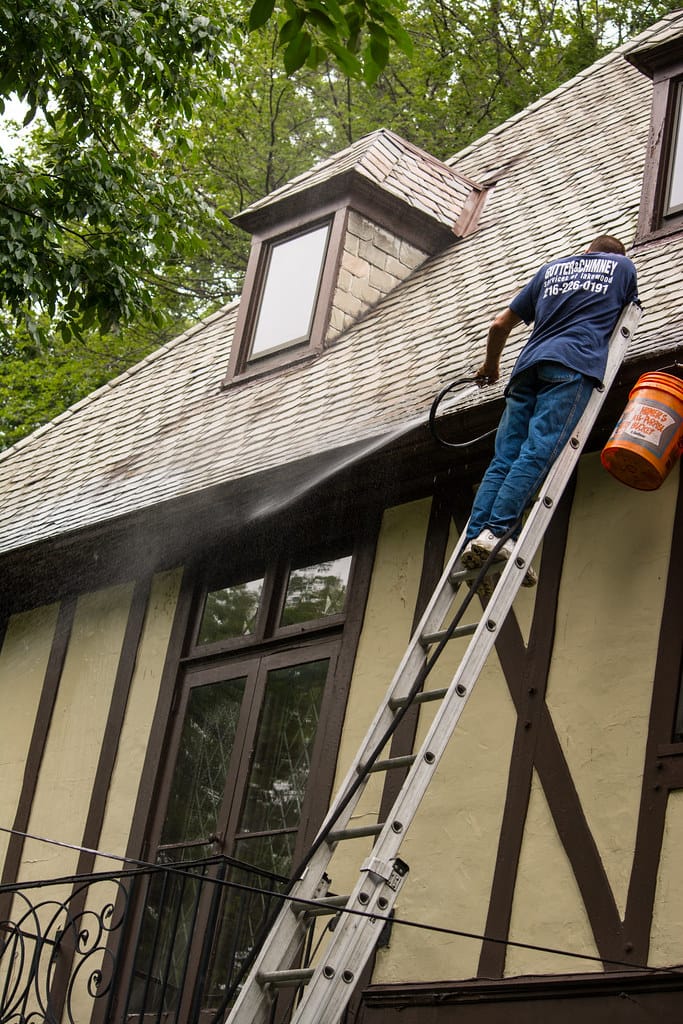
A useful fall home maintenance checklist is ordered by consequence, not by convention. Most published lists give twenty jobs equal weight, which is why they get abandoned halfway. Four things prevent expensive damage. Keep water off the building. Get the heat working before you need it. Stop cold air coming in. Test the alarms. Everything else can wait for a free weekend.
Key takeaways
- Water damage is the costly failure mode. Gutters and drainage come first.
- Book the boiler service in early autumn, not during the first cold week.
- Drain outside taps before the first hard frost or the pipe splits inside the wall.
- Chimneys need an annual inspection under NFPA 211 if the appliance is used.
- Test smoke and carbon monoxide alarms the same day you first turn the heating on.
First: keep water off the building
Nearly every expensive autumn failure is water going somewhere it should not.
- Clear the gutters and downpipes. Once the leaves are down, not before. Scoop by hand into a bucket, then flush with a hose and watch where the water goes.
- Watch a downpipe during rain. Water spilling over the edge of a gutter, or pooling at the base of a downpipe, is soaking the wall. That is what turns into damp inside.
- Check the ground falls away from the wall. Soil or paving that has built up above the damp proof course bridges it, and no amount of internal treatment fixes that.
- Clear drains and gullies. A gully packed with leaves backs up in the first heavy rain of November.
Second: heat, before you need it
Book the annual boiler or furnace service in September or October. In the week of the first frost every engineer is on emergency calls. A service that turns up a worn part then needs days to order it. The same job in autumn is routine and cheap.
Bleed radiators that are cold at the top or gurgle when the heating starts, and check the system pressure afterwards. Run the heating for an hour before you actually depend on it, because a pump that has sat still all summer is exactly when it will not start.
If you burn wood or solid fuel, the chimney needs a professional inspection. Creosote builds inside the flue and is flammable. NFPA 211 sets annual inspection as the standard, however little the fireplace was used. This is a sweep's job, not a homeowner one, and not a job to defer.
Third: stop the cold air
Sealing gaps is the cheapest comfort improvement in a house. The Department of Energy's guide to air sealing is the practical reference: caulk for fixed gaps, weatherstripping for anything that moves.
Work in this order, because it follows the size of the hole rather than how visible it is.
- The loft hatch and any ceiling penetrations. Warm air leaves upward. This is the biggest single leak in most houses and the least looked at.
- Around window and door frames. Where the frame meets the wall, not the opening part.
- Letterboxes, keyholes, cat flaps and extractor vents. Small individually, constant collectively.
- Floorboards and skirting on a suspended floor. A draught at ankle level makes a warm room feel cold.
The moving parts of windows and doors need weatherstripping rather than filler, which our guide to sealing draughty windows covers in detail.
Fourth: the ten minute safety pass
Do this the day you first switch the heating on, because that is when heating appliances start producing the thing the alarms are for.
- Press the test button on every smoke alarm.
- Test the carbon monoxide alarm, and check its expiry date. Sensors expire, typically after seven to ten years, and a dead sensor still beeps its test tone.
- Check that the alarm nearest the boiler or any fuel-burning appliance actually works.
The rest of the fall home maintenance checklist, in priority order
| Job | Why it matters | Leave it until |
|---|---|---|
| Drain and isolate outside taps | A frozen pipe splits inside the wall | Before the first hard frost |
| Cut back growth touching walls | Holds damp against masonry all winter | Any dry day |
| Check roof tiles from the ground | One slipped tile becomes a ceiling stain | Before the gales |
| Reverse ceiling fans to clockwise | Pushes warm air back down | When heating starts |
| Service the extractor fans | A weak fan is why bathrooms grow mould | Any weekend |
| Move fuel and bins off the wall | Both trap moisture against brickwork | Any time |
The jobs that are not urgent
Washing windows, tidying the shed and jet-washing paths appear on most seasonal lists. None of them prevents damage. Do them if the weather is good and nothing above is still undone. They are housekeeping rather than maintenance, and treating them as equal to gutters is how the gutters get skipped.
While you are outside anyway
The same weekend suits the garden. Cutting back what is diseased and leaving the rest standing is a twenty minute job that determines what next spring looks like, and our guide to preparing garden beds for winter sets out what to remove and what to leave.
Two indoor things are worth a look while the heating is newly on. A toilet that developed a quiet refill over the summer wastes water continuously, and fixing a running toilet takes half an hour. A house closed up for winter also shows damp faster than one aired daily. If there is a smell when you come in from the cold, our guide to tracing a musty smell covers finding the source.
Frequently asked questions
What is the single most important autumn job?
Clearing the gutters. A blocked gutter sends water down the wall instead of into the drain, and saturated masonry in freezing weather is how pointing fails and damp reaches the inside. It costs nothing but an afternoon and prevents the most expensive category of winter damage.
When should the boiler or furnace be serviced?
Early autumn, before the first cold snap rather than during it. Engineers are booked solid the week the temperature drops, and a service that finds a worn part needs time to order it. Book it in September or October and the same job is routine.
Do chimneys really need inspecting every year?
Yes, if the appliance is used. Creosote from wood burning builds inside the flue and is flammable, and NFPA 211 sets annual inspection as the standard whether or not the fireplace has seen much use. This is a job for a sweep, not a homeowner.
What happens if outside taps are not drained?
Water left in the pipe expands as it freezes and splits it, often at a joint inside the wall. The split is invisible until spring, when the pipe is used again and floods a cavity. Shut the isolating valve indoors and open the outside tap to drain it.
Is any of this worth doing in a rented flat?
The heating, damp and smoke alarm items are, because they affect safety and your comfort rather than the fabric. Gutters, roof and pipework are the landlord's responsibility, but you are the one who will notice a problem first, so report what you see in autumn rather than in January.


