
How to Lower Heating Bills Without Being Cold
Start with the fixes that cost nothing, a thermostat schedule and the curtains, before spending money on the ones that cost something.
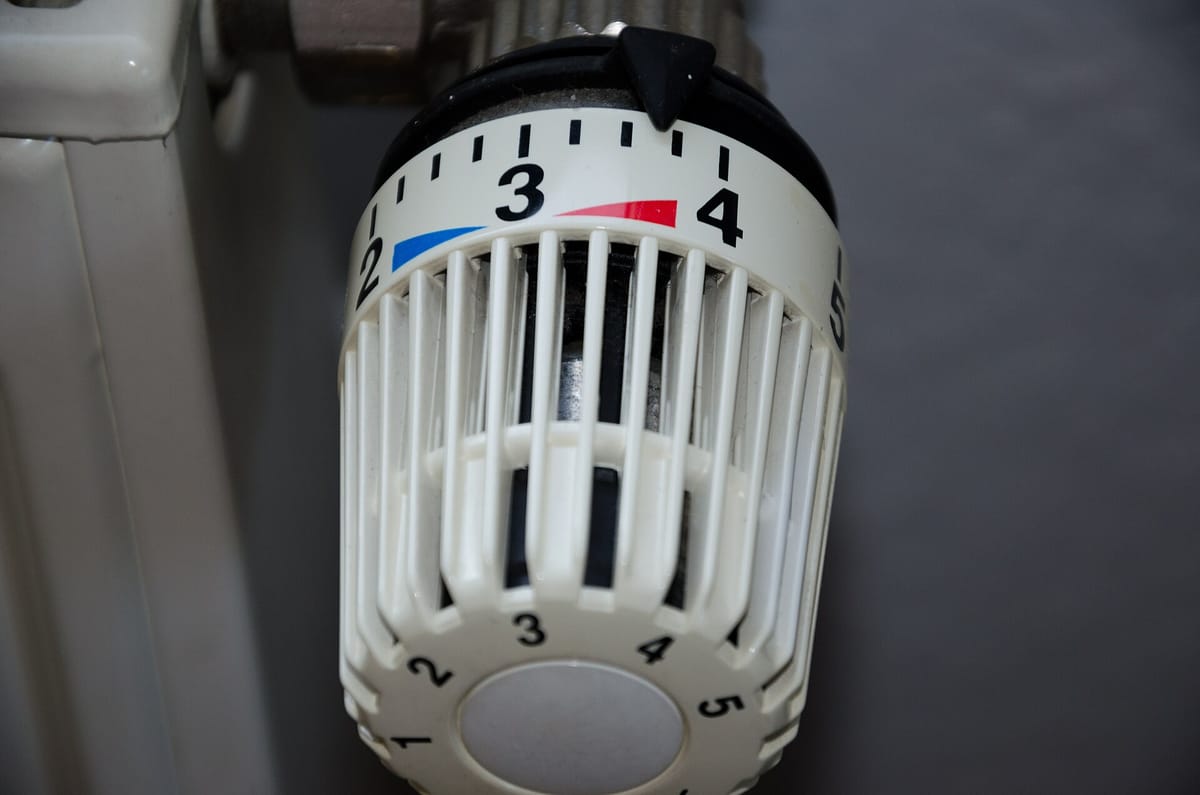
How to lower heating bills comes down to two things. Heat the house less when nobody needs it warm. Then stop paying for heat that leaks straight back outside. The thermostat schedule and the curtains cost nothing and take ten minutes. Sealing drafts costs little. Ducts, insulation and a new thermostat cost more, so do those last, once the free fixes are in place.
Key takeaways
- Turning the thermostat back 7 to 10°F (4 to 5°C) for eight hours a day saves up to 10% a year on heating and cooling. Overnight is the easiest eight hours to find.
- Reheating a cooled house does not cost more than keeping it warm all day. Heat pumps and underfloor heating are the exceptions.
- Do not close vents in rooms you are not using. On most forced-air systems that raises energy use.
- Air sealing plus insulation saves an average of 15% on heating and cooling, but it is the most expensive item here.
- Never keep the house below 55°F (13°C) in a freeze, and never use a gas oven to heat a room.
Why heat costs what it does
A house loses heat all the time, through the walls, the roof, the glass and every gap where air gets in. How fast it loses heat depends on the difference between inside and outside. A house kept at 70°F on a 30°F night loses heat faster than the same house left at 62°F.
That single fact drives most of this guide. Every hour the house sits cooler, it loses less heat and your heating has less to replace. Every gap you close means the heat you paid for stays in the room longer.
Heating and cooling together take nearly half the energy an average home uses, according to ENERGY STAR. It is the biggest single line on most winter bills, which is why small changes to it show up.
How to lower heating bills, cheapest fix first
Free: the thermostat schedule
- Pick your setback hours. Overnight and the hours the house is empty are the obvious ones. You need eight hours in total.
- Drop the temperature 7 to 10°F (4 to 5°C) for those hours. The Building America Solution Center puts the saving at up to 10% a year on heating and cooling.
- Set it to warm up 30 minutes before you get up or get home. If the house is cold when you walk in, you will override the schedule, and an overridden schedule saves nothing.
- Leave it alone for a week. Then adjust the times, not the temperatures.
Milder climates see a larger percentage saving from a setback than very cold ones, because the setback is a bigger share of the total heating.
Free: curtains, furniture and the fireplace
- Open curtains and blinds on sunny windows during the day. Low winter sun through glass is free heat.
- Close every curtain at dusk. Glass loses heat fastest at night, and a closed curtain adds a layer of still air in front of it.
- Keep curtains off radiators. A curtain hanging in front of a radiator sends its heat up behind the curtain and out through the window.
- Pull sofas and beds away from radiators and floor vents. Furniture pressed against a heat source absorbs the heat that should be warming the room.
- Close the fireplace damper when there is no fire. An open damper is a hole in the roof. Never close it while embers are still warm, because the smoke and carbon monoxide then have nowhere to go.
Free: bleed radiators and reverse the ceiling fan
A radiator that is cold at the top and hot at the bottom has air in it. Bleeding it takes two minutes with a radiator key. If it is cold at the bottom instead, bleeding will not help: that is sludge sitting in the bottom of the radiator, and it needs flushing.
Ceiling fans have a reverse switch on the motor housing. Set it to clockwise on the lowest speed and the fan pushes the warm air collecting at the ceiling back down without making a draft.
Cheap: filters and draft sealing
Change the furnace filter. ENERGY STAR advises checking it once a month in heating season and changing it at least every three months. A clogged filter cuts airflow, so the furnace runs longer for the same heat.
Then find the drafts. Hold a lit incense stick near window frames, door edges, the attic hatch and outlets on outside walls on a windy day. Where the smoke drifts sideways, air is moving. Our guide to sealing drafty windows explains which gaps need caulk and which need weatherstripping. A foam draft excluder along the bottom of an exterior door is the quickest win of the lot, and finding which gap around the door leaks shows whether it needs more than that.
Costs money: ducts, insulation and controls
Once the cheap fixes are done, these are the bigger jobs:
- Seal the ducts. Leaky ducts in an attic, crawlspace or garage heat the outdoors. ENERGY STAR says sealing them can improve system efficiency by as much as 20%. Use mastic or foil tape. Ordinary cloth duct tape does not hold.
- Air seal and insulate the attic. ENERGY STAR estimates an average of 15% off heating and cooling costs from sealing air leaks and insulating attics, floors over crawlspaces and basements.
- Fit a programmable or smart thermostat if yours cannot run a schedule. A schedule you set once saves more than one you have to remember.
- Book an annual service. A tune-up before the cold weather keeps the system running efficiently, and it is part of the rest of the fall checklist.
Mistakes that raise the bill
- Closing vents in unused rooms. On a forced-air system, closed registers push up the pressure in the ducts, and more heated air escapes through leaks in ductwork outside the living space. A Lawrence Berkeley National Laboratory study found register closing increased energy use across most of the combinations it tested. Closing more than about 60% of registers can also choke airflow enough to trip the furnace's safety limit.
- Turning the thermostat up high to heat faster. Most furnaces and boilers deliver heat at one rate. Setting 80°F does not warm the room any sooner. It only overshoots, and you pay for the overshoot.
- Deep setbacks on a heat pump. A big recovery can bring on the backup electric resistance heat, which costs far more to run. Use small setbacks of a few degrees, or a thermostat with adaptive recovery that starts warming early on the heat pump alone.
- Turning the heating off in a freeze. Pipes in outside walls can split below about 55°F (13°C) indoors. Cold rooms also collect condensation, which leads to the damp that causes a musty smell through the house.
- Heating with the oven. Never use a gas range or oven to heat a room. It is not built for continuous use and can fill the house with carbon monoxide.
- Sealing near a fuel-burning appliance. A gas boiler, furnace, water heater or fire needs air to burn safely. Do not block air vents in rooms that contain one.
What works for which heating system
The free fixes work on any system. The thermostat schedule is where the type of heating matters.
| Heating system | Best setback | Watch for |
|---|---|---|
| Gas or oil furnace | 7 to 10°F (4 to 5°C) overnight and while out | Dirty filter, leaky ducts, closed vents |
| Gas or oil boiler with radiators | 7 to 10°F (4 to 5°C) overnight and while out | Air in radiators, sludge, blocked radiators |
| Heat pump | 2 to 3°F (1 to 2°C), or use adaptive recovery | Backup heat cutting in during recovery |
| Underfloor or radiant floor | Small setbacks, or none | A slow warm-up that can take hours |
| Electric baseboard or panel heaters | Room by room, off in empty rooms | Heaters blocked by furniture or curtains |
If you rent, the thermostat, the curtains, the filter and a door draft excluder are all yours to change. Ducts, insulation and anything involving the boiler are the landlord's, so report a drafty window or a cold radiator early in the season rather than in January.
Frequently asked questions
What temperature should I set my thermostat to in winter?
There is no single correct number, because comfort varies with the house and the person. What saves money is the gap between day and night. Turning the thermostat back 7 to 10°F (4 to 5°C) for eight hours a day can save up to 10% a year on heating and cooling.
Is it cheaper to leave the heating on low all day?
Not for a furnace or an ordinary boiler. A house loses heat faster the warmer it is kept, so holding it warm all day loses more than letting it cool and reheating it later. Heat pumps and underfloor heating are the exceptions, because they recover slowly and work best with small setbacks.
Does closing vents in unused rooms save money?
Usually not, on a forced-air system. Closing registers raises pressure in the ducts, and more heated air then leaks out through gaps in ductwork that runs through the attic, crawlspace or garage. A Lawrence Berkeley National Laboratory study found energy use went up in most cases.
How low can I set the heating when I go away in winter?
Keep it at 55°F (13°C) or higher. Below that, pipes on outside walls and in unheated spaces can freeze and split, and a burst pipe costs far more than the heating you saved. A house left cold for days also gathers condensation on walls and windows.


