
How to Winterize an Outdoor Faucet Before It Freezes
A standard spigot needs its inside valve shut and the faucet left open to drain. A frost-free one only needs the hose off. Tell them apart first, because the advice is opposite.
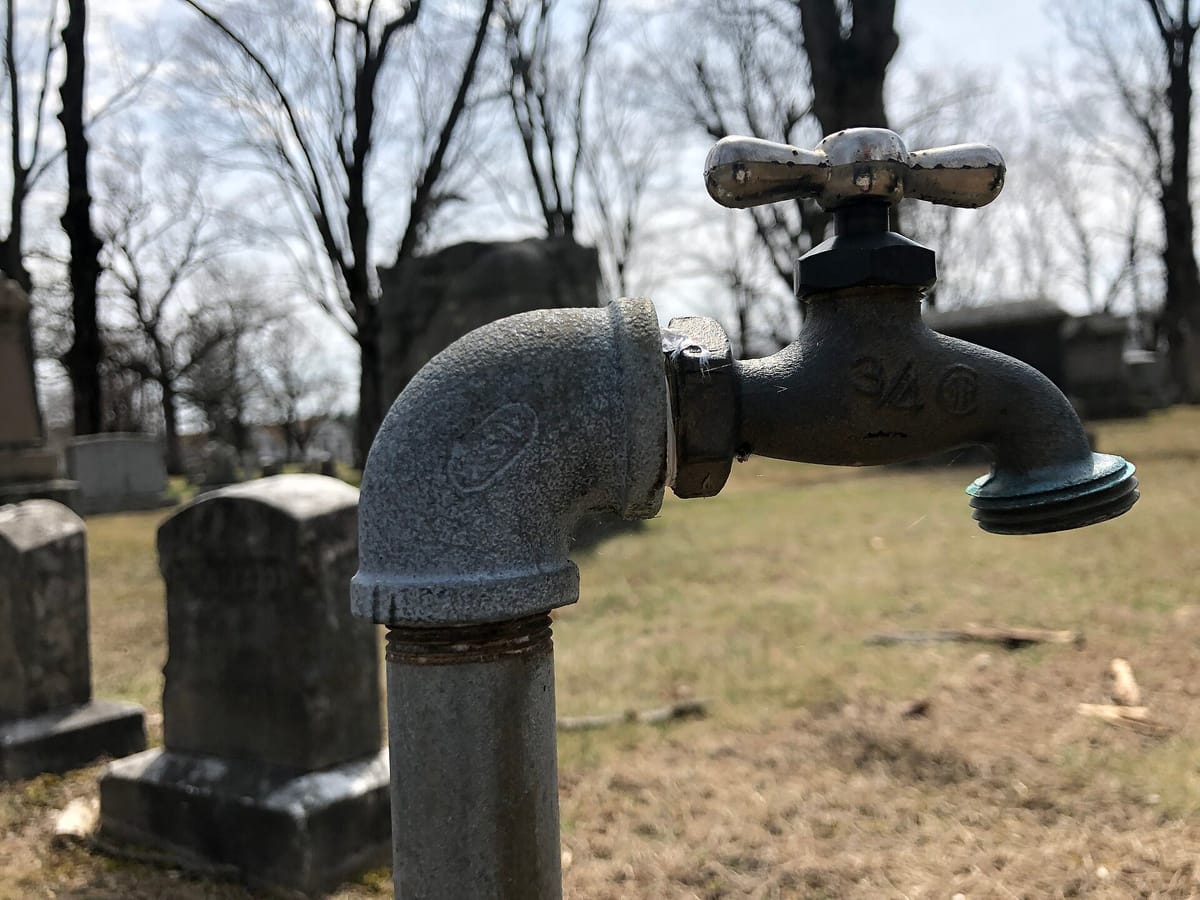
How to winterize an outdoor faucet depends on which kind you have, and the advice for the two kinds is close to opposite. A standard spigot needs its shutoff valve inside the house closed, the line drained, and the outdoor faucet left open all winter. A frost-free faucet only needs the hose taken off, because its valve already sits inside the heated wall. Work out which you have first, then do it before the first night below freezing.
Key takeaways
- Disconnect every hose first. A hose left on holds water in the faucet, frost-free models included.
- A standard spigot is winterized indoors: close its shutoff valve, drain the line, and leave the outside faucet open.
- A frost-free faucet keeps its supply on. Take the hose off and close it as normal.
- If water keeps dribbling for a few seconds after you turn a faucet off, it is probably frost-free and draining itself.
- Do it before the first freezing night. Damage from a frozen pipe usually shows up in spring.
Why outdoor faucets split in winter
Water expands as it freezes. In a pipe that is full and closed at both ends, the ice has nowhere to go, and the pipe or the faucet body splits. The split is often in the length of pipe that runs through the wall, so nothing shows outside. You find it in spring, when you turn the faucet on and water runs into the wall instead of the hose.
A hose makes this worse. Left attached, it holds water in the faucet and keeps the end of the pipe from draining. That is why the first step for every type of faucet is the same.
Standard spigot or frost-free? How to tell
| Standard spigot | Frost-free faucet | |
|---|---|---|
| Where the water shuts off | At the faucet, outside | Several inches back, inside the heated wall |
| Body | Short, the handle close to the wall | A long barrel running through the wall, often on a flat mounting flange |
| Inside the house | Usually its own shutoff valve on the pipe behind it | Often no separate valve nearby |
| Turning it off | Stops at once | Dribbles briefly as the barrel drains |
| To winterize | Close the inside valve, drain, leave the faucet open | Remove the hose, close it normally |
The quickest test is the dribble. A frost-free faucet is built to drain toward the outside after it closes, so a little water runs out of the spout for a few seconds once you shut it. A standard spigot stops dead.
If you are still unsure, look behind the faucet from inside, in the basement, crawlspace or utility room. A shutoff valve on the pipe just inside the wall, close to where the faucet comes through, usually means a standard spigot. Houses often have more than one outdoor faucet, and each standard spigot normally has its own valve.
How to winterize an outdoor faucet: standard spigot
You need a bucket and a few minutes per faucet.
- Disconnect the hose. Drain it by walking it out flat, coil it and store it somewhere it will not freeze, such as a garage or shed.
- Find the shutoff valve inside. Follow the pipe back from the faucet. It is usually in the basement, a crawlspace or a utility room.
- Close it fully. Turn a wheel handle clockwise until it stops. A lever valve is closed when the lever sits across the pipe.
- Open the outdoor faucet. Let the water in the pipe run out. It stops quickly once the line is empty.
- Open the drain cap on the inside valve, if it has one. Some shutoff valves have a small cap on the side. Hold the bucket under it, unscrew it to let the trapped water out, then screw it back on by hand.
- Leave the outdoor faucet open all winter. Any water that collects can drain, and any that freezes has room to expand instead of splitting the pipe.
- Add an insulated cover if you like. A foam cover over the faucet is a sensible final layer once the line is empty, not a substitute for draining it.
In spring, close the outdoor faucet first, then reopen the inside valve slowly and check the faucet and the wall around it for leaks.
How to winterize a frost-free faucet
A frost-free faucet, sometimes called a frost-proof sillcock, puts its valve at the inside end of a long barrel. When you close it, water stops inside the heated part of the wall, and the barrel drains out through the spout. The installation sheet from Watts, which makes them, is plain about the one condition: the hose must be removed to allow water to drain.
- Take the hose off. Every time the weather turns cold, not just once in autumn. This is the step that most often goes wrong, and the faucet then freezes despite its design.
- Close the faucet as normal. Snug, not cranked. Water dribbling out for a few seconds is the barrel draining, not a leak, and forcing the handle can damage the valve.
- Leave the supply on. Unlike a standard spigot, there is nothing to drain indoors.
- Drain the water lines if the house will be unheated. Watts' guidance is that a building left unheated for any length of time should have all its water lines drained. The faucet relies on the wall around its valve staying warm.
If a frost-free faucet never stops dripping, or water sits in the barrel and does not run out, the valve washer may be worn or the faucet may not slope down toward the outside as it should. That is a job for a plumber before the cold sets in.
Open or closed: why the advice conflicts
Search results argue about whether to leave an outdoor faucet open or closed in winter, and both answers are right for a different faucet.
On a standard spigot, the water is already off at the inside valve, so leaving the outdoor faucet open costs nothing and lets the pipe drain and expand safely. On a frost-free faucet, the supply is still on, so leaving it open would run water all winter. The rule is simple: open only when the inside valve behind it is shut.
Mistakes that split pipes anyway
- Leaving a hose on a frost-free faucet. It traps water in the barrel and defeats the design.
- Doing it after the first hard frost. If the pipe has already frozen full, the damage may be done. Do it while nights are still above freezing.
- Forgetting a faucet. Walk all the way round the house. A tap at the back or on the garage is easy to miss.
- Relying on a foam cover alone. It slows heat loss, but a full pipe still freezes in a long cold spell.
- Turning the heating off while you are away. Pipes on outside walls need the house kept warm. Our guide to lowering your heating bill gives 55°F (13°C) as the floor.
Draining the outdoor faucets belongs on the same afternoon as the rest of the fall home maintenance checklist, alongside clearing the gutters. It is also the moment to bring in anything else that holds water, from hoses to the watering cans and pots left over from putting the garden beds to bed for winter.
Frequently asked questions
Should I leave my outdoor faucet open or closed in winter?
It depends on the type. On a standard spigot, close the shutoff valve inside the house, then leave the outdoor faucet open all winter so any water left in the pipe can drain and has room to expand. On a frost-free faucet, the supply stays on, so remove the hose and close the faucet normally.
Do frost-free outdoor faucets need winterizing?
They need the hose removed. A frost-free faucet shuts the water off inside the heated wall and drains the barrel to the outside, but only if nothing is attached. Watts, which makes them, states that the hose must be removed to allow water to drain. If the house will be unheated, drain the water lines as well.
When should I winterize my outdoor faucets?
Before the first night forecast to drop below freezing, not after it. Once the pipe has frozen with water in it, the damage may already be done, and it often happens inside the wall where you cannot see it until you turn the faucet on in spring.
Are foam faucet covers enough on their own?
Not on a standard spigot with water in it. A cover slows heat loss but cannot stop a full pipe freezing in a long cold spell. Use it as a final layer after shutting the inside valve and draining the line, or on a frost-free faucet once the hose is off.

