
How to Fix a Running Toilet in Under 30 Minutes
A running toilet is nearly always one of three parts. The dye test tells you which before you buy anything.
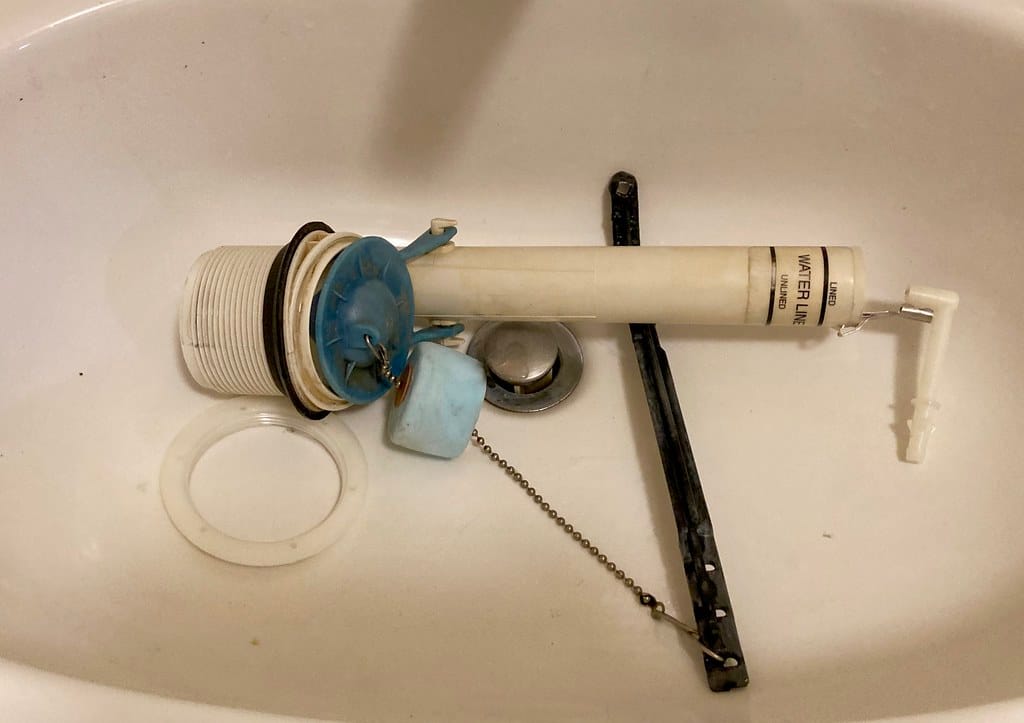
Knowing how to fix a running toilet is mostly knowing which of three parts is at fault: the flapper, the float, or the fill valve. A dye test tells you in fifteen minutes without tools. Most of the time it is the flapper, the part costs under twenty pounds, and the repair takes half an hour with the water shut off.
Key takeaways
- Do the food colouring test first. It separates a flapper fault from a fill valve fault for free.
- A worn flapper is the most common cause by a wide margin.
- The water should sit half an inch to an inch below the top of the overflow tube.
- A leaking flapper wastes around 200 gallons a day; a fill valve stuck open wastes far more.
- Measure the flapper opening before buying. Two inch and three inch are both common.
What is actually happening
A flush lifts the flapper off the flush valve, and the tank empties into the bowl. The float drops with the water, which opens the fill valve. As the tank refills the float rises again until it shuts the fill valve off.
A toilet runs when one of those three steps never finishes. The flapper may not be sealing, so the tank drains slowly and refills forever. The float may never rise far enough to close the fill valve. Or the level is set so high that water spills into the overflow tube and straight down to the bowl.
Find the fault before buying anything
- Take the lid off the tank. Set it flat on the floor, not on its edge. Porcelain lids chip easily and are hard to replace.
- Look at the overflow tube. That is the open vertical pipe in the middle. If water is trickling into it, the level is too high and the problem is the float or the fill valve. Skip to the float section.
- Do the dye test. Put a few drops of food colouring into the tank water. Do not flush. Wait 15 minutes and look in the bowl. Colour in the bowl means the flapper is passing water.
- Listen. A hiss that comes and goes every few minutes is a slow flapper leak refilling the tank. A constant hiss is the fill valve.
How to fix a running toilet by replacing the flapper
This is the fix in most cases.
- Shut off the water. The valve is on the wall or floor behind the toilet. Turn it clockwise until it stops.
- Flush and hold the handle down so the tank empties as far as it will go. Mop the rest with a sponge.
- Unhook the old flapper. It clips onto two pegs at the base of the overflow tube, and the chain unclips from the flush lever arm.
- Match the size. Measure the opening the flapper covers. Two inches suits most older tanks. Three inches is standard on newer tower-style valves and many TOTO toilets.
- Fit the new one and set the chain. Leave about half an inch of slack. Too tight and the flapper never fully seats, which is the same leak you started with. Too loose and it catches under the flapper.
- Turn the water on and test. Flush once, then run the dye test again to confirm.
Adjust the float instead, if the level is high
If water was running into the overflow tube, the flapper is fine and the level is wrong.
Modern fill valves have a float that slides on the valve body, adjusted by a screw on top or a pinch clip on a rod. Turn the screw anticlockwise, or squeeze the clip and slide the float down, to lower the level. Older ballcock valves use a brass rod that can simply be bent slightly downwards.
Aim for half an inch to an inch below the top of the overflow tube. Flush and let it refill before judging the result.
When the fill valve itself is the problem
A fill valve that hisses constantly, refuses to shut off, or shuts off only when you lift the float by hand is worn out. Replacing one takes about 20 minutes. Shut off the water, disconnect the supply line, undo the plastic locknut under the tank, then lift the old valve out and reverse the process. Fluidmaster publishes fitting guides for the common types.
On a valve that has only recently started misbehaving, check for grit first. Shut the water off and unclip the cap. Hold a cup upside down over the opening, then turn the water on briefly to flush the grit out.
What to avoid
- Buying a flapper before measuring. The wrong diameter does not seal, and a new part that leaks sends people looking at the wrong things for weeks.
- Setting the chain tight to stop a leak. It masks a flapper that is not seating and wears the seal faster.
- Bending a modern plastic float arm. Only the old brass rods tolerate it. Plastic snaps.
- Ignoring it because it is only water. A leaking flapper is roughly 200 gallons a day, every day, on a metered supply.
- Putting in-cistern bleach blocks in the tank. Chlorine degrades the rubber flapper, which is a common reason they fail early.
Symptom to cause
| What you notice | Likely cause | Fix |
|---|---|---|
| Refills briefly every few minutes | Flapper leaking slowly | Replace flapper |
| Constant hiss, water in overflow tube | Level set too high | Lower the float |
| Constant hiss, level correct | Fill valve worn or full of grit | Flush or replace the valve |
| Stops when you jiggle the handle | Chain too long, or handle sticking | Shorten chain, free the lever |
| Dye reaches the bowl in 15 minutes | Flapper not sealing | Replace flapper |
| Water on the floor behind the pan | Tank bolts or supply line | Plumber if bolts |
Worth doing while the lid is off
Check the date stamped inside the tank lid or on the porcelain. A toilet over about fifteen years old with its original parts is due a full kit rather than one flapper, and the kits cost little more.
A toilet that has run for weeks against a bathroom wall may have left damp behind it. Our guide to tracing a musty smell in the house covers finding moisture that has already spread. Learn where that shut-off valve is before you need it in a hurry. The same goes for the trap under the basin, in our guide to unclogging a bathroom sink.
Frequently asked questions
How do I know if my toilet flapper is leaking?
Put a few drops of food colouring in the tank and do not flush. Come back in 15 minutes and look in the bowl. Colour in the bowl means water is passing the flapper, because nothing else connects the two. A clean bowl points at the fill valve or the float instead.
How much water does a running toilet waste?
Around 200 gallons a day for a typical leaking flapper. A fill valve stuck wide open pours into the overflow tube at three to five gallons a minute. That is thousands of gallons a day. It is the single most expensive small fault in a house.
What size flapper do I need?
Measure the opening it seals. Two inches covers most older tanks; three inches is standard on modern tower-style flush valves and on many TOTO models. Take the old one to the shop if you are unsure. The wrong size will not seal, however new it is.
Where should the water level in the tank sit?
Half an inch to an inch below the top of the overflow tube. Higher than that and water runs down the tube continuously, which sounds like a running toilet and is one. Most modern fill valves adjust with a screw or a clip on the float rod.
When is a running toilet not a DIY job?
When the tank itself is cracked, when the bolts holding tank to bowl are weeping, or when the shut-off valve will not close. Those involve draining and lifting the tank, and a hairline crack in porcelain will not hold a repair. Call a plumber for those three.

