
Radiator Valve Stuck? How to Free the Pin
One radiator stone cold while the rest of the house heats is usually a pin under the thermostatic head, stuck down since spring. It takes ten minutes and no draining.
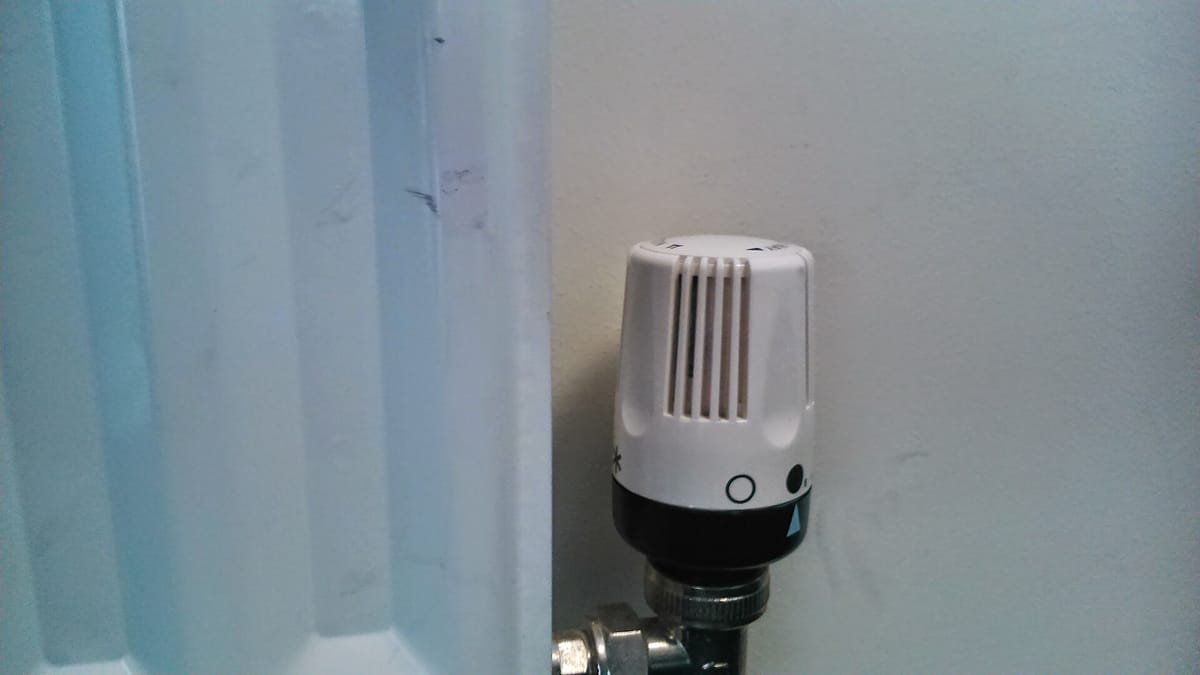
A radiator valve stuck closed is the most common reason one radiator stays cold while every other radiator in the house heats up. Under the thermostatic head is a small metal pin. It has sat pressed down since the heating went off in spring, and corrosion or limescale has fixed it there. You can free it in about ten minutes with the head off, without draining anything.
Key takeaways
- A radiator that is cold all over while the others heat is a valve problem. Cold at the top is air, and cold at the bottom is sludge.
- The thermostatic head lifts off without releasing any water. The pin underneath should press in and spring back on its own.
- Work a stuck pin gently up and down with pliers or a tap from a screwdriver handle. Force bends it, and a bent pin means a new valve.
- If the pin moves freely and the radiator is still cold, check the lockshield valve at the other end before anything else.
- Setting every head to maximum at the end of the heating season stops the pin seizing again next autumn.
Why the pin sticks after summer
A thermostatic radiator valve, or TRV, has two parts. The brass body on the pipe controls the water. The plastic head on top is only a sensor. Inside it is a wax or liquid capsule that expands as the room warms and pushes a plunger down onto the pin. When the pin goes down, the valve closes. When the room cools, the capsule shrinks, a spring lifts the pin, and hot water flows again.
That pin passes through a seal into the water. Over a summer with the heating off, it does not move at all. If the head was left on a low setting, it spent those months pressed down. Brennenstuhl, which makes radiator thermostats, puts it down to rust and deposits building up until the pin no longer moves. When the heating comes back on in autumn, the head opens but the pin stays where it is.
The same thing can happen in the up position. Then the radiator heats normally but will not turn down, even on the lowest number.
Is the radiator valve stuck, or is it something else?
Run the heating for 30 minutes, then feel each cold radiator across its whole face. The pattern tells you where to look.
| What you find | Likely cause | What to do |
|---|---|---|
| Cold all over, other radiators hot | Pin stuck down, or the lockshield closed | Free the pin, then check the lockshield |
| Hot on every setting, will not turn down | Pin stuck up | Free the pin the same way |
| Cold at the top, warm at the bottom | Trapped air | Bleed the radiator |
| Warm at the top, cold at the bottom | Sludge in the panel | Flush the radiator |
| Every radiator cold | Boiler, pump or pressure | Check the boiler pressure gauge, then call an engineer |
Two valves sit on most radiators, one at each bottom corner. The thermostatic valve has the numbered head. The lockshield, at the other end, has a plain plastic cap and no numbers. It is set once by the installer to share flow between radiators, so nobody normally touches it. Start with the head.
How to free a stuck radiator valve pin
You need a cloth, a pair of pliers and a screwdriver. A small torch helps. Most heads come off by hand.
- Turn the heating off and let the radiator cool. Give it an hour. The valve body runs hot enough to burn.
- Put a folded towel under the valve. Taking the head off releases no water, but an old valve can weep at the gland once the pin starts moving.
- Turn the head to its highest setting. That draws the plunger back off the pin, which takes the strain off the fitting and makes the head easier to remove.
- Take the head off. Most have a knurled locking ring at the base that unscrews anticlockwise by hand. Some clip on and pull straight off once a tab is pressed, and a few have a small screw. Do not grip the head with pliers. It is plastic and cracks.
- Look at the pin. It is a short metal rod, a few millimetres proud of the brass, in the middle of the valve. Press it with your thumb. A free pin goes in with light resistance and rises back up when you let go.
- If it does not move, work it gently. Grip the tip with the pliers and ease it up and down a little at a time, or tap the end lightly with the handle of the screwdriver. Little and often frees it. One hard push bends it.
- Keep working it until it springs back on its own. Press it in and let it rise ten or fifteen times so the movement clears the deposit from the shaft.
- Test before refitting the head. Turn the heating back on. With the head off and the pin up, the valve is fully open, so the radiator should start warming within about half an hour.
- Refit the head. Line it up, tighten the ring by hand only, set it to a middle number and check that turning it down makes the radiator cool slowly.
Do not pull the pin out of the valve, and do not unscrew the small brass nut around it. That nut holds the seal, and behind it is the water in your heating system at full pressure.
What about oil?
This is where advice splits. Toolstation's guide says not to use oil or lubricant, because it attracts dirt. Other suppliers suggest a squirt of penetrating spray on a seized pin. Try the dry method first, because it usually works. If the pin will not budge after a few minutes of gentle working, use one short burst of penetrating spray at the base of the pin, work it free, and wipe away everything you can reach. It is the same logic as freeing a seized door hinge pin: penetrating spray frees metal, but left there it collects grime.
When the pin is free and the radiator is still cold
If the pin moves freely and the radiator stays cold with the head off, the problem is further along.
Check the lockshield. Pull off its plastic cap. If someone closed it while decorating or taking the radiator off the wall, it will be turned fully clockwise. Open it anticlockwise with a spanner or the grips on the square shaft. If you know how many turns it was open before, use that number. If you do not, open it a turn or two, then check that this radiator and its neighbours all heat evenly.
Bleed it if the top stays cold. Once water is flowing again, air that was sitting in a radiator with no flow can show up as a cold top. Bleed it, then check the pressure gauge on the boiler, since bleeding a sealed system lowers it.
Replace the head if the valve works but the head does not. If the radiator heats with the head off but goes cold as soon as it is back on, at every setting, the capsule inside the head has failed. A new head is a hand-fitted job, but it has to match the make of the valve body. Read the brand on the body before you buy, or take the old head to the shop.
Call a heating engineer if the pin will not free or the valve weeps. A pin that stays put after gentle working, a gland that drips, or a pin that snaps means the valve body has to come off. That means isolating or draining the radiator, so it is a job for a plumber unless you have done it before. Anything involving the boiler itself is always an engineer's job.
Mistakes that make it worse
- Forcing the pin. It is thin and it bends. A bent pin cannot seal, so the radiator never turns off, and the whole valve has to be replaced.
- Gripping the head with pliers. The plastic splits and the head will not seat again.
- Unscrewing the gland nut. People mistake it for part of the head fitting. With the system full, it lets water out around the pin.
- Touching the lockshield first. It changes the balance of the whole system. Free the pin, bleed the radiator, and only then look at the lockshield.
- Turning heads to off for the summer. It holds every pin down for months, which is how they seize in the first place.
Stopping it happening next autumn
When the heating goes off for the summer, turn every thermostatic head to its highest setting. At maximum, the plunger sits back off the pin, so the pin rests in the open position instead of being pressed down for five months. The boiler is off, so nothing flows and nothing costs money.
Then, before you need heat, take one head off and press the pin. If it moves, the rest are probably fine. This sits easily in the rest of your autumn heating checks, alongside bleeding the radiators and reading the boiler pressure. Some smart radiator heads have a valve exercise setting that moves the pin on a schedule through the summer. If yours does, switch it on.
A working valve is also what makes the numbers on the head worth anything. Setting rooms you rarely use lower than the rooms you live in is one of the free changes in lowering a heating bill without being cold, and it only works if every pin actually moves.
Frequently asked questions
Can I take the head off a thermostatic radiator valve without draining the system?
Yes. The head is only a sensor that pushes on the pin. The water is sealed inside the brass valve body, under a gland around the pin, so lifting the head off releases nothing. Do not unscrew that gland or pull the pin out, because that part does hold the water back.
Why is my radiator hot even on the lowest setting?
The pin is stuck in the up position, which is open. The head turns down and presses on it, but the pin cannot travel, so water keeps flowing. The fix is the same as for a cold radiator. Take the head off and work the pin until it moves freely and springs back.
Should I put WD-40 on a radiator valve pin?
Suppliers disagree. Some suggest a drop of penetrating spray on a seized pin, and others warn that oil attracts dirt into the valve. If the pin will not move with gentle working alone, use one short burst at its base, work it free, then wipe off all the excess.
Should I turn radiator valves off over the summer?
No. Turn them to the highest setting instead. A head set low or to off holds the pin pressed down for months, which is how it seizes. At the top setting the head barely touches the pin, and the boiler controls whether any water actually flows.

