
How to Stop a Door From Squeaking Permanently
The squeak lives on the hinge pin, inside the barrel, where a spray from the outside never reaches. That is why it comes back.
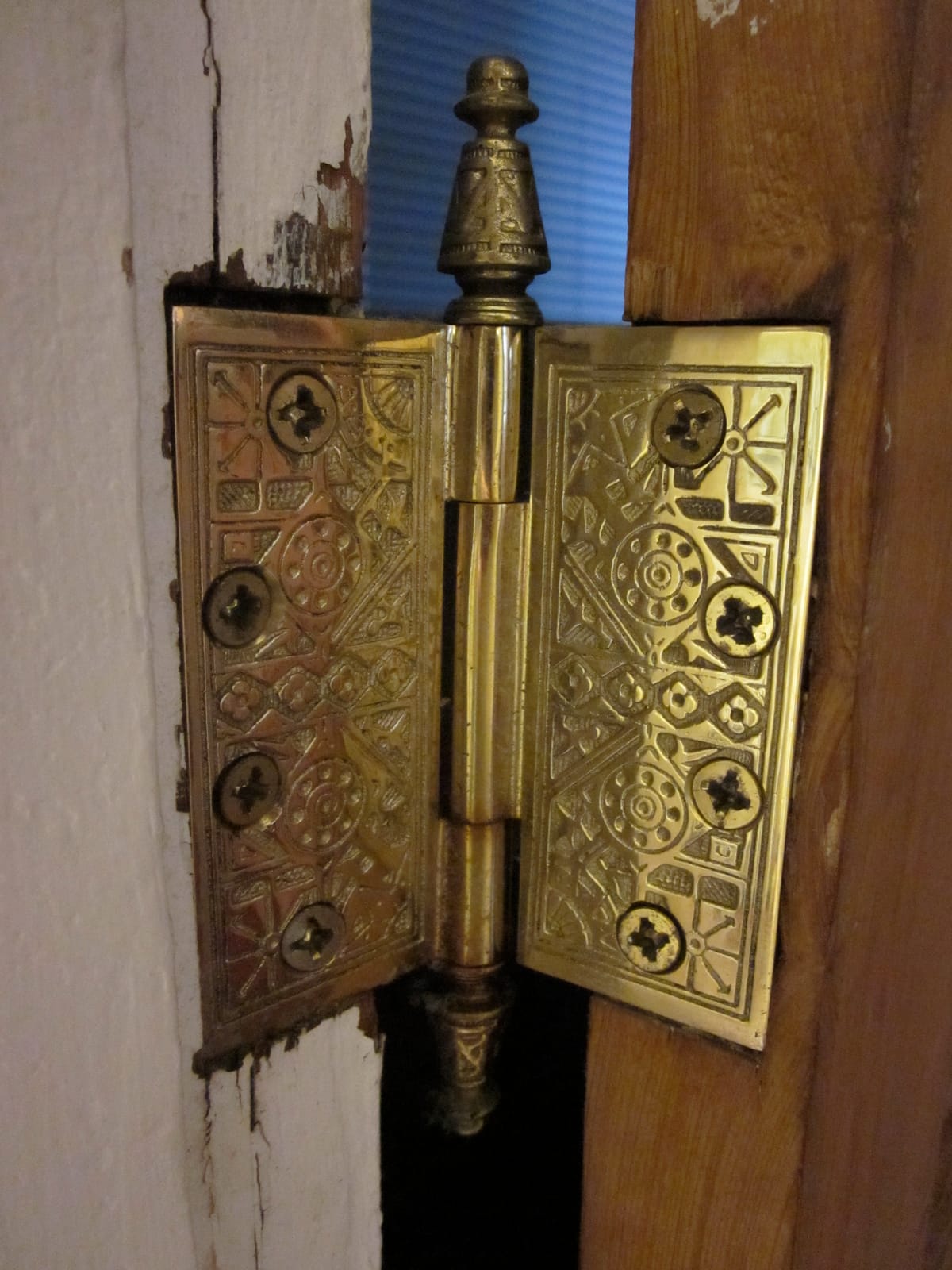
The short version of how to stop a door from squeaking permanently: take the hinge pin out, clean it, coat it with grease and put it back. The squeak is metal turning against metal inside the hinge barrel, and a spray aimed at the outside of the hinge almost never reaches that surface. This is why the noise disappears for a few days and then comes back. Done properly, on all three hinges, the job takes about fifteen minutes per door and holds for years.
Key takeaways
- The noise comes from the pin turning inside the hinge knuckles, which is a surface you cannot see or spray from outside.
- Thin sprays free a stiff pin and wash out grit. They are a cleaning step, not the fix.
- Use white lithium grease on ordinary steel pins, or silicone grease on painted, plated and exterior hinges.
- Take out one pin at a time. The other two hinges hold the door, so you never lift it off.
- A squeak that returns within weeks usually means a loose top hinge, not a lubrication problem.
Why the spray wears off in a week
A butt hinge is two leaves with interlocking knuckles and a steel pin dropped through them. When the door swings, the pin rotates against the inside of those knuckles. That contact patch is sealed inside the barrel, with a gap of a fraction of a millimetre at either end.
Aerosol lubricant sprayed at the face of a hinge lands on the leaves and runs down the door. A little creeps into the barrel by capillary action, which is enough to quieten the door for a few days. Thin oils then migrate out of the joint and the carrier evaporates, leaving a tacky film that holds every bit of dust and pet hair in the hallway. That mixture grinds rather than lubricates.
WD-40's own product line makes the distinction clear enough. For door hinges the company sells a separate white lithium grease. It describes that product as providing long-term lubrication without dripping or running. Dripping and running is precisely what the thin multi-use spray does.
What you need
- A nail, a bolt or a thin punch, plus a hammer
- White lithium grease or silicone grease
- A rag and some fine steel wool or an abrasive pad
- Penetrating spray, only if a pin is stiff or rusted
- A screwdriver that fits the hinge screws properly
Skip the grease gun. A tube or spray can of grease costs little and will do every door in the house several times over.
How to stop a door from squeaking, hinge by hinge
Work on one hinge at a time and leave the door hanging.
- Open the door and wedge it. Push a folded towel or a wooden shim under the outer corner. The door then cannot drop or swing while a pin is out.
- Drive the top pin upward. Set the nail against the bottom of the pin, in the small gap at the base of the barrel. Tap it up with the hammer. The head lifts clear and you can pull it out by hand.
- Clean the pin. Wipe it on the rag. If there is rust or a black gritty film, scrub it with steel wool until the surface is bright. The grit is what is grinding, and greasing over it just makes a quieter paste.
- Clean the barrel. Spray penetrating oil into the top of the knuckles, work the door a few inches back and forth, then wipe what runs out. Repeat until it comes out clean.
- Grease the pin. Rub a thin, even coat along its full length with a gloved finger or a rag. Add a slightly heavier dab just below the head so it is pushed down into the knuckles as the pin goes in.
- Tap the pin home. It should drop most of the way under its own weight. Two or three light taps seat the head against the top knuckle.
- Repeat on the other hinges. Never have two pins out at once. Two hinges can hold an interior door, one cannot.
- Swing the door fifteen times. This spreads the grease through every knuckle. Wipe any that squeezes out, especially above carpet.
If the pin will not move
Paint is the usual culprit on older doors. Run a utility knife around the head of the pin and down the seam between the knuckles to break the paint film, then try again. For rust, spray penetrating oil into both ends of the barrel, wait fifteen minutes and drive the pin up from below. Do not lever a screwdriver against the door edge for extra force, because it dents the timber and rarely shifts the pin anyway.
Loose-pin hinges on some exterior and fire doors have a set screw in the top knuckle. Back that out before you try to drive the pin.
Which lubricant actually stays put
| Lubricant | What it is good for | How it behaves in a hinge |
|---|---|---|
| Thin multi-use spray | Freeing a seized pin, flushing grit out of the barrel | Creeps out of the joint within days and leaves a dust-catching film |
| White lithium grease | Steel pins on ordinary interior doors | Thick enough to stay in the knuckles; the default choice |
| Silicone grease or spray | Painted, plated, plastic or exterior hinges | Dries to a clear, non-tacky film that does not collect grit |
| Petroleum jelly | A pin you have already pulled out | Stays put indoors, wipes off easily, softens in direct sun |
| Cooking or olive oil | Emergencies at midnight, nothing else | Goes gummy and sour within weeks, then squeaks worse than before |
Graphite powder gets recommended a lot for locks. Keep it in the lock cylinder and off the hinges, where it blackens fingers and streaks paintwork without outlasting grease.
When the squeak is not the hinge
If greasing every pin changed nothing, the noise is coming from somewhere else on the door. Listen for where in the swing it happens.
| What you hear | Likely source | What fixes it |
|---|---|---|
| Squeak through the whole swing | Dry or dirty hinge pin | Pull the pin, clean it, grease it |
| Squeak only in the last inch of closing | Latch rubbing the strike plate | Mark the latch with chalk, then reposition or file the strike |
| Squeak with drag near the top corner | Door sagging on a loose top hinge | Replace the middle screw with a 3-inch screw into the stud |
| A rubbery squeal as it shuts | Weatherstrip binding on the door slab | Wipe the seal and rub silicone along it |
| Scrape or chirp near the floor | Door sweep or a high spot in the carpet | Adjust the sweep height or trim the pile |
Latch noise is worth checking early, because it is easy to mistake for a hinge. Schlage, which makes the hardware, notes that a latch can squeak against the strike plate once the door has shifted. Mark the latch with chalk and find the rubbing point before you move anything.
The sagging door case is the one that fools people. Screws in a softwood jamb lose their grip over years of use. The door then hangs a few millimetres out of square, and the top pin binds in its barrel under weight it was never meant to carry. Grease quietens that for a fortnight at best. Take out the middle screw of the top hinge. Put in a 3-inch screw that reaches the framing behind the jamb, and drive it until the head sits flush with the hinge leaf. Any prouder and it will catch the other leaf when the door closes.
Mistakes that bring the squeak back
- Greasing over rust. The abrasive is still in there. You get a smoother, quieter grinding action for a month and the same squeak afterwards.
- Using too much grease. Excess squeezes out of the barrel and drips down the jamb, and on a light-coloured carpet that is a permanent mark. A thin coat plus one dab is all a pin holds.
- Pulling all three pins at once. The door comes down on your foot. If it stays up it twists instead, and the leaves no longer line up when you try to put the pins back.
- Tightening loose screws harder. A screw spinning in a stripped hole never bites. Forcing it widens the hole. Either pack the hole with glued toothpicks or go to a longer screw that reaches the stud.
- Ignoring the other two hinges. One dry pin makes the noise, but the others are the same age and the same distance from the next complaint.
How often this needs doing
Once done properly, a greased pin lasts for years on an interior door. Bathroom and kitchen doors go through more humidity and want checking sooner, and any exterior door is dealing with weather on one face. A yearly pass at every hinge in the house takes an afternoon, and it belongs alongside the other seasonal jobs in a fall home maintenance routine. It is the same class of repair as a running toilet or a draughty window, where one worn part is doing all the damage.
Wood also moves with the seasons. A door that binds and squeaks every damp August and behaves all winter is swelling, not wearing out. Deal with the hinges first. If the drag stays, look at where the slab is touching the frame rather than reaching for the plane.
Leave the bathroom door until last if you are working through the house. Its pin usually comes out the dirtiest, and by then the tap, clean and grease routine will be down to about five minutes a hinge.
Frequently asked questions
Why does my door start squeaking again a week after I spray it?
Thin sprays creep out of the hinge barrel and evaporate off the pin, leaving a film that collects dust. The dust turns into a fine grinding paste. Nothing reached the pin surface where the friction actually is, so the noise returns as soon as the film thins.
Is WD-40 bad for door hinges?
It is not harmful, it is just the wrong stage of the job. Thin penetrating spray is excellent for freeing a seized or rusted pin and flushing grit out of the barrel. Follow it with a grease that stays in the joint, or you are cleaning the hinge rather than lubricating it.
What is the best lubricant for door hinges?
White lithium grease for ordinary steel pins on interior doors, and silicone grease for painted, plated or exterior hinges. Both are thick enough to stay in the barrel instead of running out. Petroleum jelly works well on a pin you have already pulled out.
Can I lubricate a hinge without taking the door off?
Yes. You never need to remove the door. Tap each hinge pin up and out one at a time with a nail and a hammer, leaving the other two hinges holding the weight. Clean and grease that pin, tap it back down, then move to the next hinge.
My hinge pin will not come out. What now?
Paint or rust is holding it. Score the paint line around the head with a utility knife, spray penetrating oil into the top and bottom of the barrel, and leave it 15 minutes. Then drive it up from below with a nail. Do not lever against the door edge.
The squeak came back within a month. What did I miss?
Usually a loose top hinge. When the screws lose their grip in the jamb the door hangs slightly off, and the pin binds in the barrel under a load it was not made to carry. Replace the middle screw of the top hinge with a 3-inch screw that reaches the stud.

