
How to Dry Clothes Indoors Without Damp
A load of washing gives off about 2 litres of water as it dries. The best indoor set-up is the one that sends that water outside or into a tank, not into the walls and windows.
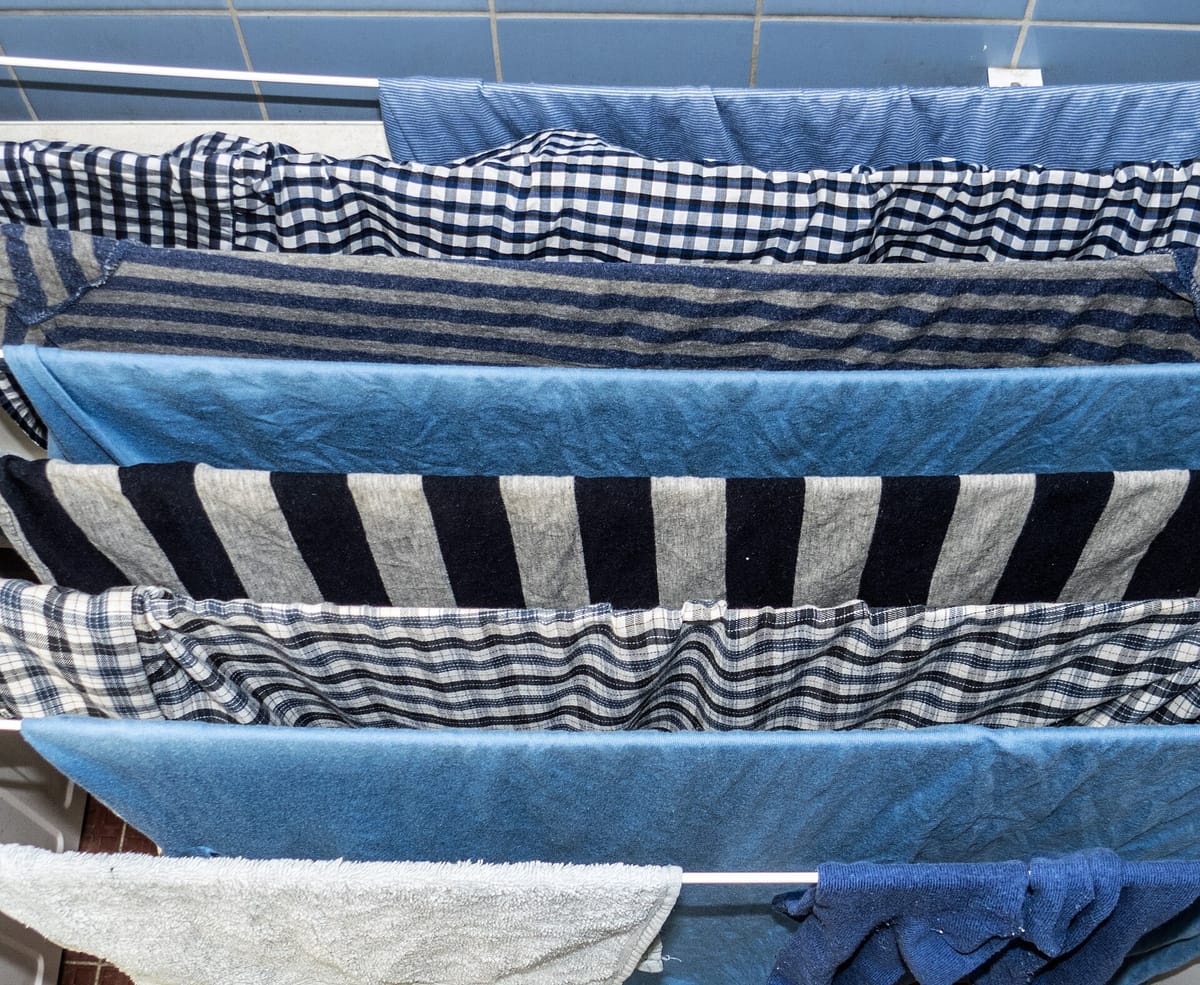
You can dry clothes indoors without damp if the water they give off has somewhere to go other than the room air. A load of washing releases around 2 litres of water as it dries. Spread on racks and radiators around the house, that water ends up as condensation on windows and mould in corners. Spin the load hard first. Dry it in one closed room with a dehumidifier running or a window open, and keep it off the radiators.
Key takeaways
- An average load gives off about 2 litres of water as it dries indoors.
- What matters is where that water goes: outside, into a tank, or into your walls and windows.
- One closed room with a dehumidifier is the best indoor set-up without a tumble dryer.
- Draping washing on radiators is the worst: it blocks the heat and puts all the moisture into the room.
- An extra fast spin before drying means less water to deal with indoors.
Why indoor drying causes damp
Researchers at the Glasgow School of Art's Mackintosh Environmental Architecture Research Unit measured what indoor drying does to a home. An average load of washing, they found, releases around 2 litres of moisture into the air as it dries. In poorly ventilated rooms, laundry could account for up to a third of the moisture in the air. They linked that moisture to the conditions in which mould spores grow and dust mites thrive.
Two litres does not sound like much until you count the loads. A household doing several loads a week in winter is pouring water into the air that has to settle somewhere. It lands on the coldest surfaces first, which is why the windows stream the morning after washing day. Our guide to condensation on windows every morning covers the rest of the moisture a house produces.
Every set-up, ranked by where the water goes
Speed matters less than you would think. A rack in a cold room dries slowly but harmlessly if the water leaves. A rack by a hot radiator dries fast and puts every drop into the house.
| Set-up | Where the water goes | Damp risk | Notes |
|---|---|---|---|
| Outside on a line | Outdoors | None | Works on dry, breezy days even in winter |
| Vented tumble dryer | Outside through the vent hose | None, if the hose goes outdoors | A hose into the room just moves the problem |
| Condenser or heat pump dryer | A tank or the drain | Very low | The Glasgow researchers recommend energy-efficient condensing dryers |
| Rack in a closed room with a dehumidifier | The dehumidifier's tank | Low | The best set-up without a dryer |
| Rack in a closed room with the window open | Mostly outdoors | Low to moderate | Costs some heat while the window is open |
| Rack in the bathroom with the extractor fan on | Outdoors, slowly | Moderate | Only works if the fan runs throughout |
| Rack in the living room | Into the house | High | The moisture spreads to every cold surface |
| Clothes on radiators | Into the house | Highest | Also blocks the heat |
How to dry clothes indoors without damp, step by step
- Spin harder before you start. Run an extra spin at the fastest speed the care labels allow. Every bit of water the machine throws out is water that does not have to evaporate in your house.
- Pick one room and shut the door. A spare bedroom, utility room or bathroom. Spreading racks around the house spreads the damp with them.
- Run a dehumidifier in that room, or open the window. A dehumidifier collects the water in its tank. Without one, open the window wide enough to let damp air out. Keep the door shut so the rest of the house stays warm.
- Space the clothes out. Leave a gap between items on the rack so air reaches both sides. Hang shirts on hangers from a rail, and turn thick items like jeans and hoodies inside out partway through.
- Keep the rack near the radiator, not on it. A short gap lets heat reach the room and the washing. It still dries well.
- Empty the dehumidifier tank afterwards. That water is what would otherwise be on your windows.
- Put the clothes away fully dry. Slightly damp clothes in a wardrobe carry the moisture with them and can smell musty within days.
Why radiators are the worst place
Draping washing over a radiator feels efficient, because the heat is on anyway. The Glasgow researchers singled it out for two reasons.
It costs heat. A radiator works by warming the air that moves across its face. Cover it with wet clothes and that air cannot circulate. The room stays cooler, and the thermostat keeps the boiler running longer. The researchers note the energy use is worse still when radiators are turned up to speed the drying.
It puts all the moisture into the room. The water evaporates straight into warm air. That air carries it to the coldest surfaces in the house: windows, outside walls and the corners behind furniture. Clip-on radiator airers have the same problem, if slightly less of it.
If radiators are the only option, put a rack a short distance in front. Then run a dehumidifier or open a window in that room.
Mistakes that make damp worse
- Drying in a bedroom you sleep in. Two people breathing all night already add moisture. A rack of wet washing on top of that is the recipe for black mould on the window seals.
- Venting a tumble dryer into the room. A vented dryer with its hose dangling indoors puts all the water into the house, and quickly.
- Leaving the washing in the machine. Damp laundry sitting in the drum smells within hours and needs washing again. If the machine itself smells, our guide to a washing machine that smells covers the seal and the filter.
- Using a dehumidifier with the door open. It then tries to dry the whole house and barely dents the moisture from the laundry.
- Folding clothes away while slightly damp. Wardrobes have little air movement, and damp fabric there turns musty.
Signs your drying habits are causing damp
Look for condensation on the inside of windows the morning after washing day. Check for black specks on window seals or in the corners of the room you dry in. Notice a stale smell that never quite clears. Any of those means the water from the laundry is staying in the house. A stale smell in particular is usually mould somewhere you cannot see. Tracing a musty smell in the house shows where to look first.
Frequently asked questions
How do I dry clothes indoors without causing damp?
Dry them in one room with the door shut and either a dehumidifier running or a window open, never spread around the house. Spin the load on the fastest speed the care labels allow first, so less water has to evaporate indoors. A vented or condenser tumble dryer is better again, because the water leaves the house or ends up in a tank.
Is it bad to dry clothes on radiators?
Yes, for two reasons. Clothes over a radiator block the heat it would otherwise put into the room, so the heating works harder. And the water they release goes straight into the room air, where it ends up as condensation on cold windows and walls. A rack a short distance from the radiator dries almost as well without either problem.
How much water does a load of washing release?
Research by the Mackintosh Environmental Architecture Research Unit at the Glasgow School of Art put it at around 2 litres per average load. In poorly ventilated rooms, drying laundry indoors could account for up to a third of the moisture in the air.
Does a dehumidifier dry clothes faster?
Usually, yes, because drier air takes up moisture from fabric more quickly. More importantly, it collects the water from the laundry in its tank instead of leaving it in the room. Put the rack and the dehumidifier in a small room with the door and window shut, and empty the tank when the load is dry.


