
Why Your Washing Machine Smells and How to Fix It
The drum is rarely the problem. Three places hold the smell, and a hot empty cycle only reaches one of them.
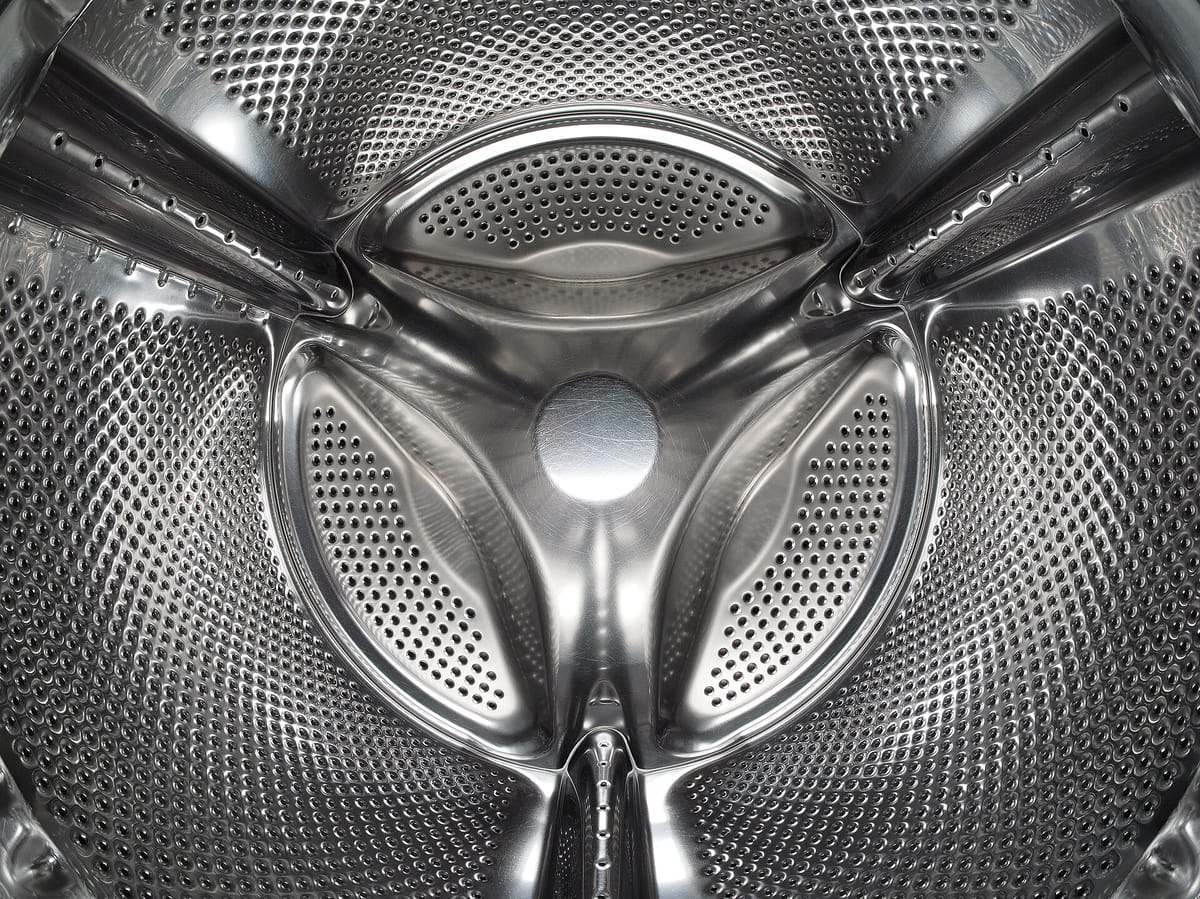
If your washing machine smells, the drum is almost certainly not where the problem is. The odour comes from a film of detergent residue, body oils and lint that builds up in three specific places: the detergent drawer, the folds of the door seal and the drain filter. A hot empty cycle rinses the drum and leaves all three untouched, which is why the smell comes back within a week.
Each of the three needs a different job doing, and none of them takes long.
Key takeaways
- The drum is the one part that cleans itself every wash. The drawer, the seal and the filter do not.
- Washing only at 30 degrees lets residue accumulate. Research on domestic machines found low temperatures help microorganisms survive inside the machine.
- A musty smell points at the seal and the drawer. A drain-like smell points at the filter and standing water.
- Run one hot maintenance wash a month at 60 degrees or above, on an empty drum.
- Leave the door and the drawer ajar between washes. It is the habit that does the most for the least effort.
Why a washing machine smells
Every wash leaves a little behind. Detergent and fabric softener that never fully dissolved, oils and skin cells off clothes, and lint from the fabric itself. In a warm, damp machine that residue becomes a film that bacteria and mould grow in, and that film is what you smell.
Two modern habits speed it up. The first is cold washing. A study sampling domestic washing machines noted that sustainable washing trends including lower temperatures "negatively affect laundry hygiene by facilitating the survival of microorganisms inside the washing machine". The second is liquid detergent and softener, which leave more residue behind than powder does.
Front-loaders suffer more than top-loaders. The door has to seal watertight, so it holds a rubber gasket with folds in it, and those folds keep a small amount of water after every cycle.
Here is the part most advice gets backwards. The door seal is what everyone photographs and wipes, but when researchers sampled the different sites inside domestic machines, they found "the highest alpha diversity was found for the detergent drawer, followed by the fibres isolated from the washing solution, and the sump. The lowest alpha diversity was found inside the door seal." Diversity is a measure of how many different organisms are present rather than how many there are in total, so this does not mean the seal is clean. It means the drawer is hosting the broadest community of the three, and it is usually the part nobody removes.
The three places the smell actually lives
| Where | What it smells like | How often |
|---|---|---|
| Detergent drawer | Sweet, musty, sometimes sour | Every two months |
| Door seal | Musty, visible black spotting | Monthly |
| Drain filter | Drains, stagnant water, rotting | Every two to three months |
Work through all three the first time. After that you can treat whichever one matches the smell you get.
The detergent drawer
- Pull the drawer out completely. Almost all of them release with a tab or a button in the middle of the softener compartment.
- Rinse it under hot running water and scrub the compartments with an old toothbrush, especially the underside of the softener siphon cap where a grey sludge collects.
- Reach into the empty housing with a bottle brush or a cloth wrapped round a wooden spoon. The roof of that cavity is usually worse than the drawer itself.
- Dry both and slide the drawer back, leaving it open a couple of centimetres.
AEG advises cleaning the dispenser "once every two months", which is about right for a household washing four or five loads a week.
The door seal
- Peel the lip of the rubber gasket back with your fingers and look into the fold at the bottom. This is where water sits.
- Fish out the coins, hair grips and grit that have collected there.
- Wipe the fold and the face of the seal with an appliance-safe cleaner on a cloth. Whirlpool's guidance is to use "an all-purpose cleaner recommended for appliance use" with a sponge, cloth or nonabrasive plastic pad, and to "avoid using harsh chemicals or abrasive cleaners that could damage the seal".
- For black spotting that will not wipe away, a thick bleach or soda crystals left on the mark for a few minutes will lift most of it. Check your manual first, because some manufacturers advise against bleach in their machines.
- Dry the fold with a cloth. Leaving it wet undoes the job.
Black marks that survive a thorough clean have grown into the rubber rather than onto it. A badly pitted gasket is a replacement part, and on most machines it is a job a competent DIYer can do with the manual to hand.
The drain filter
This is the one people have never opened, and it is where a genuinely bad smell usually comes from.
- Switch the machine off at the wall.
- Find the filter cover, normally a small hatch at the bottom right of the front panel.
- Put a shallow tray and a towel down first. There will be more water than you expect, and on many machines it comes out faster than a tray can take, so work in stages.
- Unscrew the filter anticlockwise and pull it out.
- Clear the lint, hair, coins and buttons, then rinse it under running water and scrub the mesh.
- Check inside the empty housing for anything caught, and screw the filter back in clockwise until it is firm.
If the water that comes out is grey and smells of drains rather than laundry, that standing water was your smell. The same stagnant-water principle applies under a basin, which is why a sink can start to smell for reasons that have nothing to do with what went down it.
The monthly maintenance wash
Once the three parts are clean, a hot empty cycle keeps them that way.
Run a cotton programme at 60 degrees or higher with nothing in the drum. AEG's own guidance is to "run a maintenance wash once a month", and where a machine has no dedicated drum-clean setting, to "run a Cotton programme at a high temperature (60–90℃) with an empty drum". Whirlpool likewise recommends cleaning the washer "approximately once a month".
You can run it empty, with a proprietary washing machine cleaner, or with soda crystals. Do not use more than one of those in the same cycle, and never put bleach in alongside a descaler or any other cleaner.
If you live somewhere with hard water, limescale gives residue more to cling to. It is the same deposit that clouds a shower screen, and the same descaling logic applies as in our guide to removing hard water stains from shower glass.
What to avoid
Cleaning only the drum. A cleaning tablet in an empty drum is the most common response to the smell and the least effective, because the drum is the part that gets rinsed with detergent every single wash.
Using more detergent to mask it. Overdosing is one of the causes. Undissolved detergent is the residue that feeds the film, so a heavier scoop makes next month worse.
Leaving wet washing in the drum. A load left overnight puts the smell straight back into the clothes, and the clothes put it back into the machine.
Mixing cleaning products in the machine. Use one product per cycle. Never combine bleach with a descaler, a limescale remover or another cleaner, in the machine or in a bucket.
Ignoring a smell that is on the clothes rather than in the machine. If clean laundry smells only once it has dried, the problem may be the drying rather than the washing. Damp air in the room is its own fault to chase, and our guide to getting rid of a musty smell in the house covers finding the source.
Keeping it from coming back
Four habits do almost all the work.
Leave the door and the drawer ajar after every wash so both dry out. Take washing out as soon as the cycle finishes. Dose detergent to the instructions on the bottle rather than by eye. Add one hot wash a month, either the maintenance cycle or a genuinely hot load such as towels or bedding.
That last one is worth pairing with something you already wash regularly, which makes it a great deal easier to remember than a calendar reminder. If you do not have a fixed laundry rhythm yet, our guide to how often to wash your sheets sets out a schedule that a monthly hot wash slots into neatly.
Give the filter a look before you go away for more than a week. Standing water in a warm, closed machine is the one situation that turns a faint smell into a room you notice from the hallway.
Frequently asked questions
Why does my washing machine smell even though I clean it?
Almost always because the cleaning stops at the drum. A hot empty cycle rinses the drum but barely touches the detergent drawer, the folds of the door seal or the drain filter. Those three hold the residue, and each has to be cleaned by hand.
Can I use bleach in my washing machine to get rid of the smell?
You can, on the seal and in a maintenance wash, but check your manual first because some manufacturers advise against it. Never combine it with any other cleaner or descaler in the machine. Rinse with a plain hot cycle afterwards before washing clothes.
How often should I clean my washing machine drain filter?
Every two to three months for most households, and monthly if you wash a lot of towels, bedding or pet bedding. The filter traps lint, coins and hair, and standing water behind a blocked one is what produces the drain-like smell rather than a musty one.
Does washing at 30 degrees make my machine smell?
It contributes. Research on domestic machines found that lower wash temperatures help microorganisms survive inside the machine, so a household washing only at 30 degrees builds residue faster. The fix is not to abandon cold washes but to add one hot maintenance wash a month.
Should I leave the washing machine door open between washes?
Yes, and the detergent drawer too. Both dry out instead of staying damp, which is the single easiest habit that keeps the smell from returning. Leave the door ajar rather than wide open if it blocks a walkway or a child or pet could climb in.


