
How to Clean Grout Between Tiles With Less Scrubbing
Grout gives way to contact time, not pressure. Twenty minutes of oxygen bleach lifts more than twenty minutes of scrubbing, and does not wear the joint away.
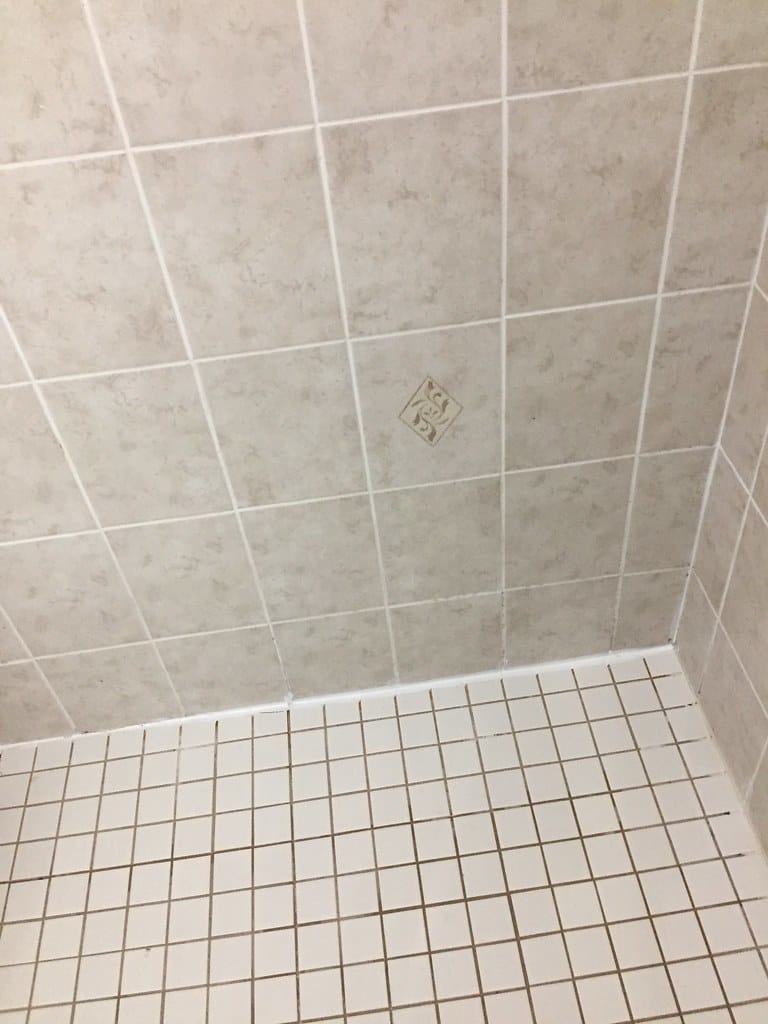
How to clean grout between tiles comes down to contact time rather than force. Wet the joint with warm water, cover it with oxygen bleach, and leave it alone for 20 minutes before a brush touches it. The chemistry lifts the soil out of the pores in that time. Scrubbing a dry line harder shifts very little and wears the grout away while you do it, which is why the same joints look worse after every clean.
Key takeaways
- Wet the grout first, apply oxygen bleach, wait 20 minutes, then use a stiff nylon brush.
- Use warm water. Below about 40°C the powder releases its oxygen too slowly to help.
- Keep vinegar off cement grout for routine cleaning. Acid eats the joint and forces an early regrout.
- Rinse twice. Cleaner left on the tile holds dirt and greys the line again within a week.
- Grout that is soft, chalky or crumbling has failed. That is a regrouting job, not a cleaning one.
Why grout darkens and tile does not
Glazed tile is a sealed surface. Cement grout is not. It is a porous mineral joint full of tiny voids, and everything that lands on the floor works its way into them: soap film, cooking grease, body oils, dissolved minerals from the water, and in a wet room, mould.
That is the reason a mop makes the tile gleam and leaves the lines grey. The mop passes over the top of a pore it cannot reach into, and the dirty water it leaves behind drains into the joint.
Knowing which of those you are dealing with decides the method.
| What you see | What it usually is | What shifts it |
|---|---|---|
| Even grey along every line | Soil and detergent film in the pores | Oxygen bleach, 20 minute dwell |
| Dark patches by the sink or hob | Grease that has soaked in | Alkaline degreaser first, then oxygen bleach |
| Black speckling in a shower | Surface mould | Oxygen bleach, then fix the ventilation |
| White chalky bloom | Mineral deposit from hard water | A mild acid, on the tile only, kept off the grout |
| Grout lower than the tile, sandy to touch | Erosion. The joint is failing | Regrout. No cleaner helps |
A white bloom is worth separating out, because it is a different material entirely. Minerals sit on top rather than inside, and they dissolve in acid the same way the film on shower glass does. The catch is that the acid which removes them also attacks the cement joint underneath, so it belongs on the tile face and nowhere near the grout.
What you need
- Oxygen bleach powder, sold as sodium percarbonate or as a laundry booster
- A stiff nylon grout brush, narrow enough to sit in the joint
- Warm water, around 45°C, and a spray bottle
- Two microfibre cloths and a bucket of clean rinse water
- Rubber gloves and an open window
Oxygen bleach is worth understanding, because the label rarely explains it. The powder splits into hydrogen peroxide and washing soda as soon as it meets warm water. The peroxide breaks down further into water and oxygen, and that release of oxygen inside the pore is what pushes the soil back out. It needs warmth to get going and it needs time to finish.
How to clean grout between tiles
- Sweep or vacuum the floor first. Loose grit turns into a grinding paste under the brush and scratches the tile.
- Spray the grout lines with warm water. Wet the joint properly. Dry powder on dry grout does nothing at all.
- Apply the oxygen bleach. Sprinkle it along the wet line, or mix a tablespoon into a cup of warm water and make a paste for a wall. A paste stays where you put it on vertical surfaces.
- Leave it for 20 minutes. This is the step that replaces the scrubbing. Work in sections of about a square metre so each one gets the full 20 minutes rather than five.
- Mist it if it starts drying. A dried treatment has stopped reacting. A light spray of warm water keeps it working.
- Work the line with the nylon brush. Short strokes along the joint, moderate pressure. The soil should lift rather than need force.
- Rinse with clean water, twice. Change the water between passes. The first rinse moves the dirt around, the second removes it.
- Dry the tile with a microfibre cloth. Standing water carries the last of the dissolved soil straight back into the joint as it evaporates.
Heavily soiled grout usually wants a second round rather than harder brushing. A second 20 minute treatment gets further than doubling the pressure ever does, and it costs the joint nothing.
Kitchen floors and backsplashes
Grease needs breaking down before oxygen bleach can reach what is under it. Wash the area with a warm alkaline degreaser first, the same approach that works on greasy kitchen cabinets, rinse it, then treat the grout as above.
Shower walls
Use the paste, and start at the bottom. A treatment applied at the top runs down over grout you have not prepared yet and leaves streaks that are visible once everything dries.
The mistakes that cost you grout
A wire or brass brush. Metal bristles take the top off the joint along with the dirt. The line ends up sitting lower than the tile, which collects more water and stains faster than it did before. Nylon only.
Vinegar as a routine cleaner. Acid dissolves cement, and cement is what grout is made of. The Tile Council of North America advises an alkaline cleaner over an acidic one for this reason, noting that acids are not recommended by grout manufacturers because needing to regrout is sometimes the result. An occasional use will not ruin a floor. Every week will.
Skipping the second rinse. Alkaline cleaner that stays on the surface leaves a sticky film, and that film attracts dirt. The floor looks clean on the day and grey a week later, and the usual conclusion is that the product did not work.
Mixing chlorine bleach with anything else. Bleach and ammonia produce chloramine gas. Bleach and an acid such as vinegar produce chlorine gas, which irritates the eyes and airways at low concentrations and is dangerous at higher ones. Washington State's Department of Health sets this out plainly. Use one product at a time, and ventilate the room.
Cleaning a room that smells of damp instead of drying it. Mould that keeps returning to the same grout line is being fed by moisture. The cleaning is the easy half. Dealing with the musty smell and its source is what stops it coming back.
When cleaning is the wrong job
There is a point where no cleaner helps, and recognising it saves an afternoon. Press a fingernail into the grout. Sound grout is hard and stays put. Failed grout gives, or comes away as powder.
Regrout rather than clean when the joint is cracked, when it has dropped below the level of the tile, when it feels soft or spongy, or when pieces break out under light pressure. Crumbling means the material has lost its structure, and scrubbing it accelerates the loss. Water gets in behind tile through joints like these, which turns a cosmetic problem into a repair.
Cement grout has a working life of roughly 10 to 15 years in a wet room. Dark lines in a shower fitted two decades ago are often at the end of that, not dirty.
Keep it clean: seal the joint
Cleaning opens the pores back up. Sealing closes them, and it is the difference between doing this twice a year and doing it every month.
Wait 24 hours after cleaning so the grout is fully dry, then apply a penetrating sealer along the joints and wipe any excess off the tile before it dries. Most need 24 to 48 hours to cure, and the floor should stay dry for that time.
To find out whether you need it at all, put a few drops of water on the grout and watch for 30 seconds.
| What the water does | Sealer state | Action |
|---|---|---|
| Beads and sits on top | Intact | Nothing, retest in six months |
| Sits, then slowly darkens the joint | Wearing thin | Reseal within a month |
| Soaks in within a few seconds | Gone | Clean and reseal now |
Test in more than one spot. Sealer wears unevenly, so the strip in front of the sink fails long before the grout under the towel rail. As a rough schedule, shower grout wants resealing every 12 to 18 months and floor grout every two to three years.
One habit does more than any product listed here. Dry the tile after every wash, the same way the last wipe decides the result on oven glass. A joint that is never left sitting in water holds its colour for months longer than one that is.
Frequently asked questions
What is the fastest way to whiten grout?
Oxygen bleach powder on grout you have already wetted with warm water, left for 20 minutes, then worked with a stiff nylon brush. The dwell time does the lifting. Going straight in with a brush on dry grout takes longer and wears the joint down at the same time.
Is vinegar safe to clean grout with?
Not for routine use. Cement grout is alkaline and vinegar is an acid, so it dissolves the surface of the joint a little each time. Grout manufacturers advise against it, and it etches marble, travertine and limestone tiles as well.
Why does my grout look dirty again a week after cleaning?
Usually leftover cleaner. Alkaline products leave a film that holds dirt if they are not rinsed off properly, so the line greys over within days. Rinse twice with clean water and dry the tile. Unsealed grout also reabsorbs soil quickly and needs sealing.
Can you clean grout that has gone black with mould?
Surface mould comes off with oxygen bleach and a nylon brush. Black that stays after two treatments has grown into the joint or is sitting behind it, which points to a moisture problem. Fix the ventilation or the leak, then regrout the affected lines.
How often should grout be resealed?
Test rather than guess. Drop water on the grout and watch what it does. Beading means the sealer is intact, soaking in within seconds means it has gone. In practice that is every 12 to 18 months in a shower and every two to three years on a floor.


