
Condensation on Windows Every Morning? Stop It at Source
Wet windows at dawn are moisture from the night meeting the coldest glass in the house. Lower the humidity to suit the weather outside, keep air moving over the glass, and wipe it dry every morning.
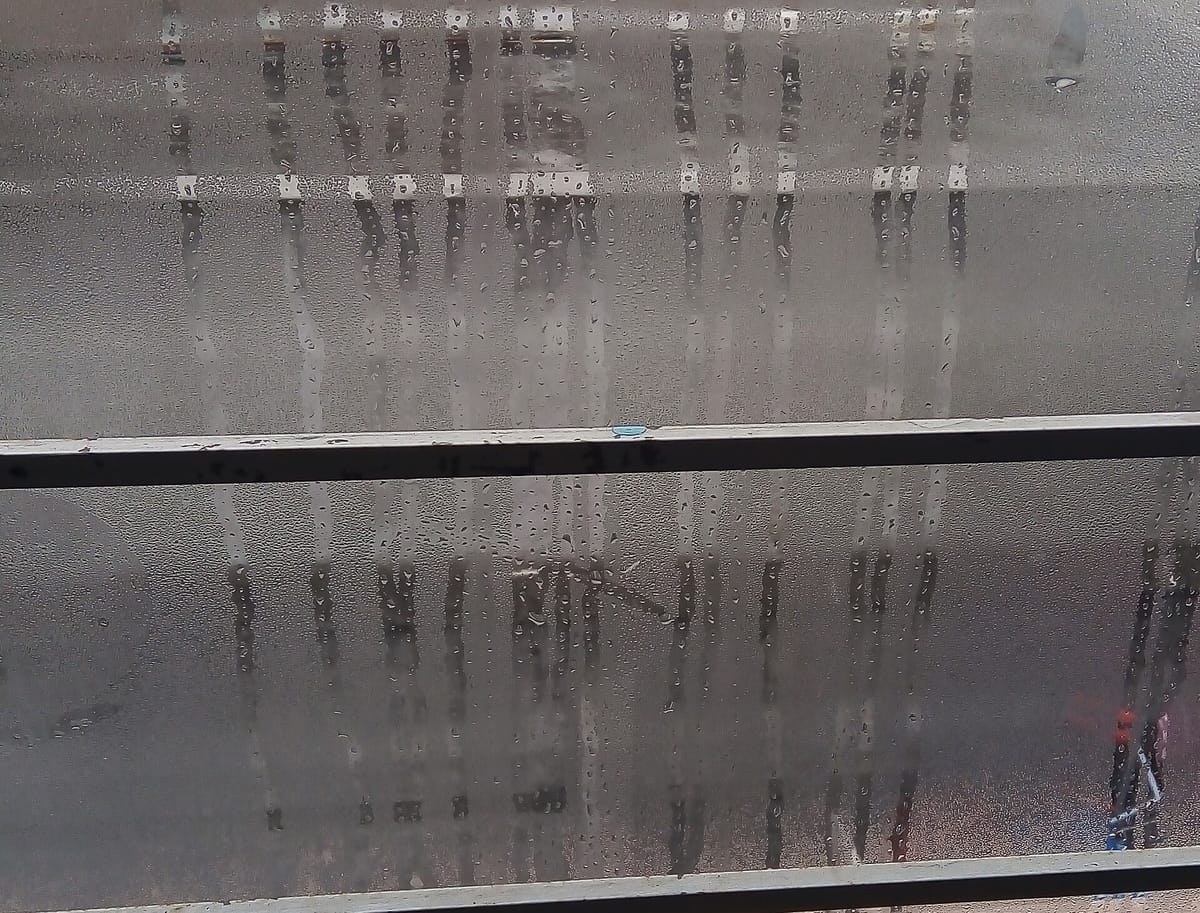
Condensation on windows every morning means the air in the house is holding more moisture than the cold glass allows. Overnight the glass reaches its coldest point while closed rooms fill with moisture from breathing, showers and drying laundry. That moisture settles on the glass as water. The fix is to lower indoor humidity as the weather gets colder and keep air moving across the glass. Wipe it dry every morning so it does not soak into the frame.
Key takeaways
- Morning condensation is moisture from indoors meeting the coldest surface in the room, not a fault in the window.
- The colder it is outside, the lower indoor humidity has to be. Around 35% to 40% suits most winter weather.
- A hygrometer shows the number, so you know whether changes are working.
- Open curtains and blinds in the daytime, and run the extractor fan during and after every shower.
- Wipe the glass and sill dry every morning. Water left there feeds mould on the seals and rots the frame.
Why there is condensation on windows every morning
Air holds moisture as vapour, and warmer air holds more of it. When air touches a surface cold enough, it cannot hold all its moisture any more, and water forms on that surface. The temperature at which that happens is the dew point.
Window glass is the coldest surface in most rooms. At dawn several things make it colder still, while the air gets damper:
- It is the coldest part of the night outside, so the glass is at its coldest too.
- The heating has often been turned down overnight. The air cools. Cooler air with the same moisture in it is closer to its dew point.
- People have been breathing in a closed room for eight hours. Bedrooms are the classic case: two sleepers, a shut door and a closed window.
- Curtains and blinds have been drawn all night. Natural Resources Canada points out that closed drapes or blinds, deep sills and furniture trap cool air against the glass. Air moving across it keeps it warmer.
That is why the windows are streaming at 7am and dry by lunchtime. Nothing about the house has changed. The glass has warmed and the air has moved.
The humidity to aim for
The single number that controls condensation is indoor relative humidity, and the right level falls as the weather outside gets colder. FGIA, the North American window and glazing industry body, publishes these limits, assuming the rooms are kept at about 20°C (70°F):
| Outdoor temperature | Maximum indoor humidity |
|---|---|
| -7°C to 4°C (20°F to 40°F) | 40% |
| -12°C to -7°C (10°F to 20°F) | 35% |
| -18°C to -12°C (0°F to 10°F) | 30% |
| -23°C to -18°C (-10°F to 0°F) | 25% |
| -29°C to -23°C (-20°F to -10°F) | 20% |
| Below -29°C (-20°F) | 15% |
These are a guide, not a guarantee. Single glazing and old aluminium frames run colder than the table assumes and mist up at lower humidity. Modern double or triple glazing stays warmer and can cope with more.
To find out where you are, put a digital hygrometer in the room with the worst windows. Leave it for a few days. They are inexpensive and end the guessing.
How to stop condensation on windows
Work through these in order. The first ones cost nothing.
- Wipe the glass and sill dry every morning. Use a squeegee or an absorbent cloth and wring it out into the sink. It takes two minutes and stops the water reaching the frame.
- Open curtains and blinds as soon as you are up. FGIA's advice is to keep them open in daylight. Room air then reaches the glass and warms it.
- Air the room for 10 minutes. Open the window wide, or open two windows across the house, after the wipe. A short, full exchange swaps damp air for dry without chilling the walls.
- Run the extractor fan during every shower and until the mirror clears. Keep the bathroom door shut while it runs. The steam then goes out, not along the landing.
- Put lids on pans and use the cooker hood. Vent it outside if it can be.
- Dry laundry where the damp can leave. Outside, in a dryer vented outdoors, or in one closed room with a window open or a dehumidifier running. A rack of wet washing in the living room puts all the water it held into the room air. Our guide to drying clothes indoors without damp ranks every set-up by where that water goes.
- Keep the heating steady rather than off overnight. A house that cools right down overnight has cold walls and cold glass by morning. Our guide to lowering the heating bill covers how far to set back without causing this.
- Turn down any humidifier. Adjust it to the table above as the weather changes, or turn it off.
- Run a dehumidifier in the worst room. Set it to the humidity in the table and empty it daily. It deals with what the steps above cannot.
Mistakes that make it worse
- Leaving the water on the glass. It dries back into the room air, so tomorrow starts just as damp. Meanwhile, what runs down soaks the sill and the seals.
- Closing heavy curtains tight against the glass. It traps the coldest air in the room against the window. Leave a gap at the bottom, or open them in the day.
- Blocking trickle vents. The small vents along the top of many modern frames are there to let a little air through all the time. Taped over, they turn the room into a sealed box.
- Leaving a window open a crack all night. It mostly makes the glass and the room colder. A short, wide airing does more.
- Running a humidifier at the same setting all winter. A level that suits a mild November will stream down the glass in a January cold snap.
- Painting over black mould on the sill. It grows back through. Clean it off and deal with the moisture that feeds it.
When the window is the problem
Most morning condensation is the house, not the window. A few patterns point the other way:
| What you see | What it means | What to do |
|---|---|---|
| Water on the room side, every window | High indoor humidity | The routine above |
| Water on one window only | Cold spot: single glazing, a draft or an outside wall with no heat below | Check the seals around it |
| Water mainly round the edges of double glazing | The edge of the unit is the coldest part, normal on older units | Better air flow, lower humidity |
| Mist between the panes | The seal of the glass unit has failed | Replace the sealed unit |
| Water on the outside of the glass | The window is insulating well | Nothing |
Mist that will not wipe off from either side is inside the glass unit, and no change to the room will shift it. Our guide to condensation between double pane windows explains why only the glass unit, not the frame, needs replacing.
When it has already caused damage
Look at the bottom corners of the frame, the rubber seals and the plaster under the sill. Black specks there are mould, and a stale smell in the room usually comes from the same source. Our guide to tracing a musty smell in the house covers finding and cleaning damp before it spreads. Soft or blackened timber on a wooden frame is rot, and that needs a carpenter or a window repairer before the sash fails.
Frequently asked questions
Why do my windows have condensation every morning?
Overnight the glass reaches its coldest point while a closed room fills with moisture from breathing, showers and drying laundry. When the inner surface of the glass falls below the dew point of the room air, water condenses on it. Bedrooms are usually worst because two people breathing all night add moisture to a small, closed space.
What humidity should my house be to stop condensation on windows?
It depends on how cold it is outside. With rooms at about 20°C (70°F), the window industry body FGIA recommends at most 40% relative humidity when it is between -7°C and 4°C outside, 35% down to -12°C and 30% down to -18°C. A cheap hygrometer shows where you stand.
Is condensation on the inside of windows bad?
A little on cold mornings is normal, but water left on the glass every day runs down onto the sill and the frame. Over a winter that leads to black mould on the seals, peeling paint and rotting timber. Wipe it off each morning and work on the humidity so less forms.
Does opening a window stop condensation?
Opening a window for a short time swaps damp indoor air for drier outdoor air, which lowers the humidity. It works best for a few minutes after showering, cooking or first thing in the morning, rather than a window left on a crack all night, which mainly makes the glass and the room colder.


