
Small Bedroom Storage Ideas That Actually Fit
A small bedroom is rarely short of volume. It is short of used volume, and four measurements tell you where yours is hiding.
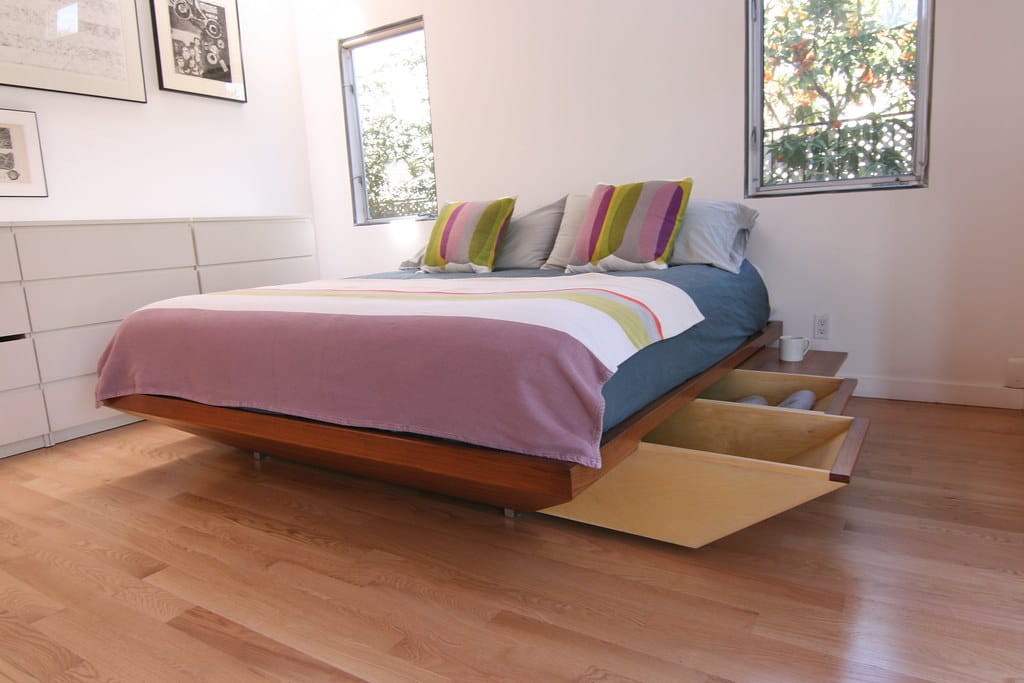
Most small bedroom storage ideas start with what to buy. Start with a tape measure instead. A small room is rarely short of volume. It is short of used volume. The air above the wardrobe, the six inches under the bed, the two walls with nothing on them. Four measurements tell you which of those you have before you spend anything.
Key takeaways
- Measure under-bed clearance to the underside of the frame, then subtract an inch.
- The band between about 15 and 48 inches from the floor is where daily things belong.
- Storage that stops at 72 inches wastes the two feet above it.
- Keep 20 to 24 inches beside the bed, whatever else you fit.
- Closed boxes under the bed, never loose piles. Loose items stop you cleaning.
Take four measurements first
- Floor to the underside of the bed frame. Not to the top of the mattress. This is the only number that decides what fits underneath.
- Floor to ceiling. Then subtract the height of your tallest existing storage. The difference is dead air you already own.
- The walking gap beside the bed. Anything that drops this below about 20 inches makes the room feel smaller than it is, whatever it stores.
- The depth of the free wall. Under nine inches and you are looking at shelves or hooks rather than furniture.
Under the bed, done properly
Under-bed clearance varies more than people expect. A standard divan or frame often gives six or seven inches. Platform beds can give as little as four. Risers add another eight or more, and are the cheapest way to create storage in a room that has none.
Standard under-bed boxes are about six inches tall, so six inches of clearance is the practical floor. Measure yours and subtract an inch. A box that exactly matches the gap catches on the frame every time.
- Use closed boxes with lids. Open trays fill with dust and make the space unusable for cleaning.
- Put wheels or a hard base on anything heavy. Dragging a loaded box across carpet tears the pile.
- Keep the head end clear if the bed is against an outside wall. Cold wall plus still air is where damp starts.
- Store flat things flat. Out-of-season clothes, spare bedding and luggage suit this space. Anything you need weekly does not.
The small bedroom storage ideas that use height
The single biggest gain in a small bedroom is usually the two feet above the wardrobe. Storage that stops at 72 inches in a room with a nine foot ceiling is leaving a full layer unused.
The US Access Board sets the unobstructed reach range at 15 to 48 inches from the floor. It is an accessibility standard rather than a bedroom one, but the line is useful. Below 15 and above 48 you are crouching or stretching. Put daily clothes in that band and everything else outside it.
That gives a simple rule for a small room:
- Above 48 inches: out of season, luggage, spare bedding, in labelled boxes.
- 15 to 48 inches: everything you touch daily. Rails, drawers, the shelf you actually use.
- Below 15 inches: shoes, low drawers, under-bed boxes.
The walls people forget
- Behind the door. An over-door rack or hooks take bags, dressing gowns and belts without using any floor.
- Above the door. A shelf spanning the frame is a foot of storage nobody notices, good for books and boxes.
- The wall beside the bed. A narrow floating shelf replaces a bedside table and gives back the floor.
- Corners. A corner shelf unit uses the one bit of wall a rectangular piece of furniture cannot.
What to avoid
- Buying boxes before measuring the gap. Depth and height are the dimensions people get wrong. A box an inch too tall ends up living in the hall.
- A wardrobe wider than the walking gap allows. The room loses more in feel than it gains in storage.
- Loose items under the bed. They collect dust, block cleaning, and hide damp until it has spread.
- Deep shelves for clothes. Anything over 16 inches deep grows a back row you will forget about.
- Pushing furniture flat against an outside wall. Leave two inches so air can move behind it.
Where the space usually is
| Space | Typical size | Best for | Watch for |
|---|---|---|---|
| Under the bed | 4 to 14 inches | Out of season, bedding, luggage | Measure to the frame, subtract an inch |
| Above the wardrobe | 12 to 30 inches | Boxed, labelled, rarely used | Label faces out; you read it from below |
| Behind the door | 2 to 4 inches deep | Bags, robes, belts | Door must still open fully |
| Above the door | 10 to 14 inches | Books, boxes | Fix into studs, not plasterboard alone |
| Narrow wall strip | Under 9 inches | Shelves, hooks | Too shallow for furniture |
| Corner | Varies | Shelf unit | The one shape rectangles cannot use |
The overlap with the closet
A bedroom and its closet are the same problem at different scales, and the same measure-first order applies to both. Our guide to organising a small closet covers the vertical zones inside the wardrobe. That is where most of a bedroom's clothes belong, before any of it reaches a box under the bed.
Put a hand on a wall before you fill it. Storage against a cold exterior wall traps still air, and still air on a cold surface is where mildew starts on leather, wool and cardboard. Our guide to tracing a musty smell in the house covers what to do if that has already begun.
Frequently asked questions
How much clearance do I need under the bed for storage?
At least six inches for standard under-bed boxes, which are usually around six inches tall. Measure from the floor to the underside of the frame, not to the top of the mattress, then subtract an inch so the box slides rather than scrapes. Risers add eight inches or more.
What height should shelves be for things I use daily?
Between roughly 15 and 48 inches from the floor. That is the reach range the US Access Board sets for unobstructed reach, and while it is an accessibility standard rather than a storage one, it marks the band you can use without stretching or crouching.
Is floor-to-ceiling storage worth it in a small room?
Yes, and it is usually the single biggest gain. A wardrobe stopping at 72 inches leaves two feet of dead air above it in a standard room. Taking storage to the ceiling adds a full layer for the cost of one shelf, and that layer holds the things you touch twice a year.
How much space should I leave beside the bed?
Around 20 to 24 inches to walk and make the bed comfortably. Narrower than that and you turn sideways every time. This is the measurement worth protecting when you are tempted to fit a wider chest of drawers.
Should I store things under the bed at all?
Yes, if they are in closed boxes rather than loose. Loose items under a bed collect dust and stop you cleaning there, and a bed against an outside wall can get damp underneath. Closed boxes on a low riser solve both.


