
How to Organize a Small Closet So It Holds More
Most small closets are not short of space, they are short of used space. Measure the vertical gaps before buying a single bin.
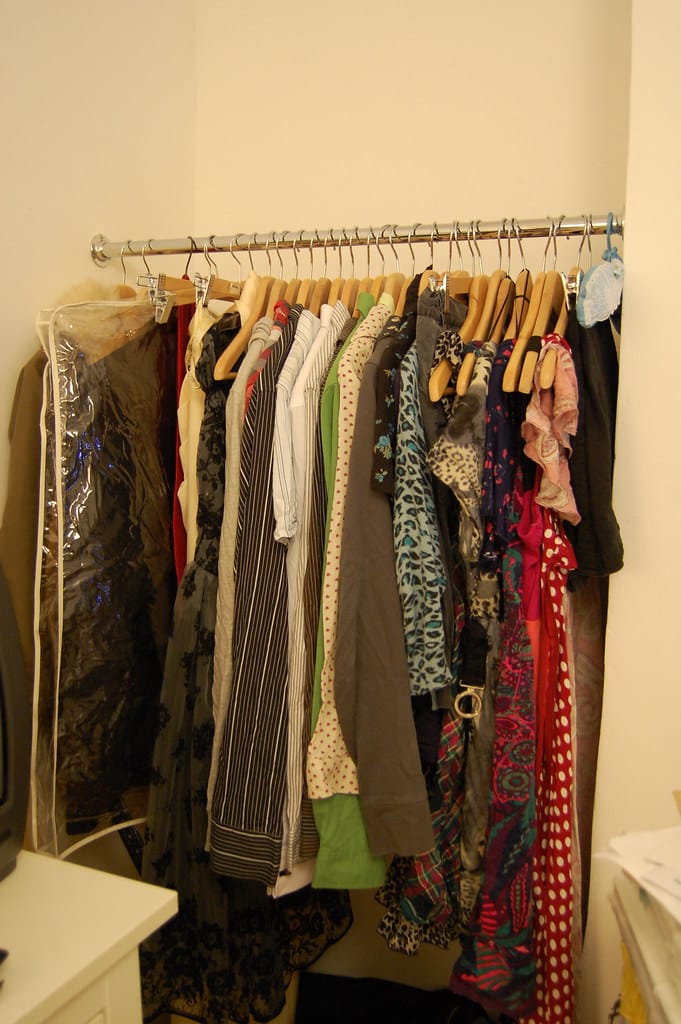
Learning how to organize a small closet starts with a tape measure, not a shopping trip. Most narrow closets are not short of space. They are short of used space: a single rod at chest height leaves two feet of dead air above it and three feet below. Measure those gaps first, decide what vertical zones the closet can hold, and buy storage only after that.
Key takeaways
- Measure the gaps above and below the rail before buying anything. That is where the space is.
- A double rod at roughly 84 and 42 inches doubles hanging capacity for shirts and folded trousers.
- Long items need their own full-height bay. Mixing them into a double-hang section wastes both.
- Slim hangers reclaim about a third of the rod length, but do nothing about the dead air.
- Shelf brackets more than 36 inches apart let the shelf bow under folded clothes.
Where the space actually goes
Stand in front of the closet and look at it in horizontal bands. A builder's standard fit-out is one rod around 66 inches up with one shelf above it. Shirts hang about 38 inches, so they finish near 28 inches off the floor. Everything below that is empty, and the shelf above is usually one deep layer with a foot of air over it.
That is the whole problem. The rail is full, so the closet feels full, while a third of its volume holds nothing.
Measure before you buy
Four numbers decide what will fit. Write them down.
- Interior width, wall to wall. Measure at the back, not at the door frame. Frames are often narrower than the space behind them.
- Interior height, floor to the underside of the top shelf. This is the number that decides whether a double rod is possible.
- Depth, front to back. Under 22 inches and hangers sit at an angle rather than square to the wall.
- The longest garment you own. Hang it, measure from the rod to the hem, and add two inches.
How to organize a small closet in vertical zones
Standard practice puts a single rod near 70 inches, or for a double hang, the upper rod near 84 inches and the lower near 42. Each rod then has about 40 inches of drop, which clears a shirt or a pair of trousers folded over the bar.
Height has a second limit besides what fits. The US Access Board puts the unobstructed reach range at 15 to 48 inches. That is an accessibility standard rather than a closet one, but it marks the band anyone can use without stretching or crouching, which is where daily clothes belong.
Work top to bottom:
- Top shelf, above 84 inches. Out-of-season and rarely used. Boxes with labels facing out, because you will be reading them from below.
- Upper rod, 84 inches. Shirts, blouses, jackets.
- Lower rod, 42 inches. Trousers folded over the bar, skirts, children's clothes.
- Floor, 0 to 14 inches. Shoes on a low rack or in shallow drawers. Not a heap.
If the interior height is under 78 inches, a double rod will not work. Put one rod at 66 inches and use the space beneath for a chest of drawers or stacked boxes instead.
Give long items their own bay
Coats and dresses need 60 to 66 inches of clear drop. Hung in a double-hang section they foul the lower rod, and hung in a single-hang section they waste the 20 inches beneath them. Divide the width instead: two thirds double-hang, one third full height. A small closet with one long-hang bay holds more than one that tries to be uniform.
Use the depth you already have
- The back of the door. An over-door rack takes shoes, scarves or cleaning supplies without touching the closet's own volume.
- The side walls. Narrow closets have two unused vertical strips. Adhesive hooks on the inside of a side wall hold bags and belts.
- Above the top shelf. Where a shelf sits well below the ceiling, a second shelf costs one bracket pair and adds a full layer.
Shelf spacing follows what you are storing. Folded clothes need 12 to 14 inches so stacks do not topple when you pull from the middle. Sheets and towels manage on 10. Keep brackets no more than 36 inches apart or the shelf bows.
What to avoid
- Buying bins before measuring. A bin two inches too deep for the shelf is a bin you cannot close the door on. Depth is the dimension people get wrong.
- Filling the floor with a shoe pile. It blocks the lowest and easiest-to-reach zone, and you end up storing shoes at eye level instead.
- One uniform rod height across the whole width. It guarantees dead air under short items and crushed hems under long ones.
- Deep shelves for folded clothes. Anything more than 16 inches deep hides a back row you will forget you own.
- Hanging knitwear. Jumpers stretch at the shoulder on a hanger. Fold them flat on a shelf.
Zone heights at a glance
| Zone | Height from floor | What it holds | Clearance needed |
|---|---|---|---|
| Top shelf | 84 inches and above | Out of season, luggage | 12 inches |
| Upper rod | 84 inches | Shirts, blouses, jackets | 40 inches drop |
| Long-hang bay | 66 to 72 inches | Coats, dresses | 60 to 66 inches drop |
| Lower rod | 42 inches | Trousers, skirts | 40 inches drop |
| Folded shelves | Variable | Jumpers, jeans | 12 to 14 inches |
| Floor zone | 0 to 14 inches | Shoes, shallow drawers | 14 inches |
One thing to check before you drill
Feel the back wall. A closet built against an outside wall runs colder than the room, and still air plus a cold surface is where mildew starts on leather and wool. Leave a two-inch gap between the rail and the wall, and do not push boxes tight against it.
If the room itself runs cold, the closet will be the first place it shows. Our guide to sealing draughty windows covers the room side of that problem. What we verify before publishing a method, and where we say a job needs a professional, is set out on our editorial standards page.
Frequently asked questions
How much vertical space does a hanging shirt need?
Around 36 to 38 inches from the top of the rod to the hem, so allow at least 40 inches for the zone. Trousers folded over a hanger need about the same. Dresses and coats need 60 to 66 inches, which is why they belong in their own full-height section rather than a double-hang bay.
What is the right height for a double hanging rod?
Standard practice puts the upper rod near 84 inches from the floor and the lower rod near 42 inches. That gives roughly 40 inches of drop for each, enough for shirts above and folded trousers below. Below about 78 inches for the top rod, the lower garments start to drag.
Should I use slim velvet hangers?
They help, but less than people expect. Swapping bulky plastic for slim hangers reclaims roughly a third of the rod length. That is worth doing, though it does nothing about the dead air above the rail, which is usually the larger loss in a small closet.
How far apart should closet shelves be?
For folded clothes, 12 to 14 inches is comfortable and stops stacks toppling. Sheets and towels manage on 10 inches. Leave 42 inches where a rod hangs beneath a shelf. Shelf brackets should sit no more than 36 inches apart or the shelf bows under weight.
Is it worth taking the door off a small closet?
Sometimes. A hinged door swallows floor space in front of it and stops you fitting anything to the inside face. Replacing it with a curtain or a sliding panel frees that arc. It also removes a surface you could have hung a shoe rack on, so measure both before deciding.


