
How to Season a Cast Iron Skillet Properly
Seasoning is oil baked past its smoke point until it bonds to the iron. Too much oil is why pans come out sticky.
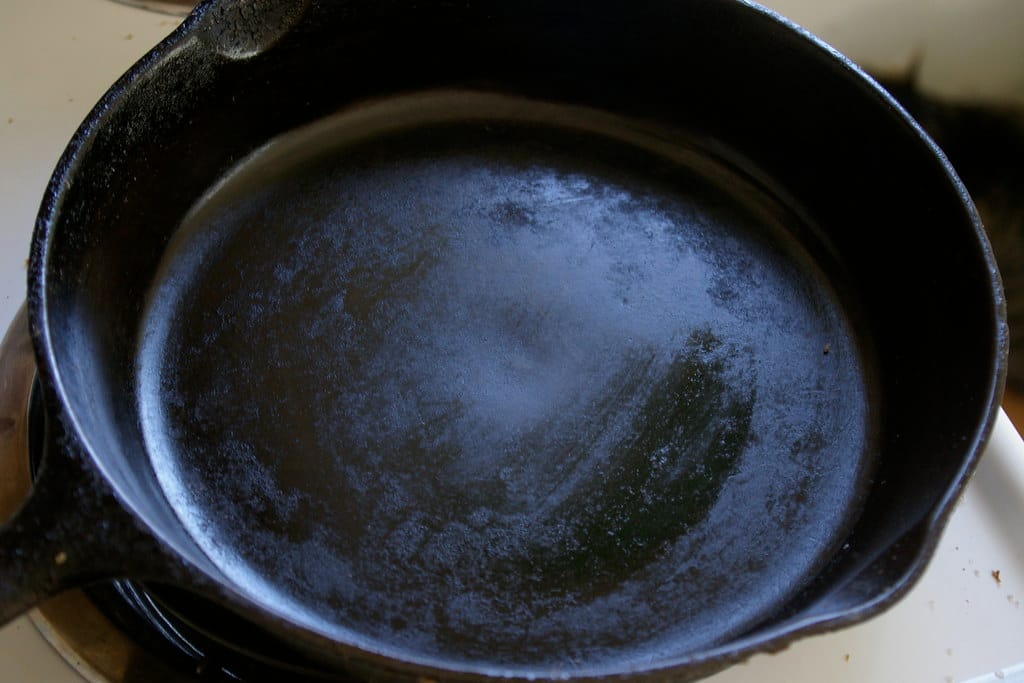
Learning how to season a cast iron skillet is mostly learning to use less oil than feels right. Seasoning is not a coating you apply, it is oil baked past its smoke point until it chemically bonds to the iron. Wipe the pan almost dry, bake it upside down at 450 to 500F for an hour, and let it cool in the oven.
Key takeaways
- Wipe the oil back until the pan looks dry, not glossy. Excess oil is why pans come out sticky.
- Bake at 450 to 500F. Below that the oil never fully polymerises.
- Upside down, with foil on the rack below, so nothing pools on the cooking surface.
- Several thin coats beat one thick one, every time.
- Soap is fine. Soaking, dishwashers and storing the pan damp are not.
What seasoning actually is
Heated past its smoke point, oil does not simply dry. The fatty acid chains break apart and rebond, forming a hard layer keyed to the iron itself. That reaction is polymerisation, and it is why a well-seasoned pan is slick rather than greasy.
It also explains the two most common failures. Oil applied too thickly cannot polymerise all the way through, so the surplus stays soft and tacky. Oil heated below its smoke point never starts the reaction at all.
How to season a cast iron skillet
Lodge, who have been making the things since 1896, publish the method that works.
- Wash and dry the pan completely. Warm water, a little detergent, a stiff brush. Dry it on a low burner for a minute so no water is left in the pores.
- Apply a very thin layer of oil, inside, outside and the handle.
- Wipe it back off. This is the step that decides the result. Go over the whole pan with a clean cloth until it looks dry rather than oily. There should be no shine and nothing that runs when you tilt it.
- Put foil on the bottom oven rack to catch drips.
- Bake upside down on the centre rack at 450 to 500F for one hour. Upside down stops oil pooling in the base.
- Turn the oven off and leave the pan inside to cool. Cooling slowly in the oven helps the layer adhere.
Repeat for two or three coats on a stripped or rusty pan. One coat is enough for a routine top-up.
Open a window. At 500F the oil passes its smoke point by design, so the kitchen will smell and a little smoke is expected. That smoke leaves a fine film across the oven, door glass included, and it bakes hard at this temperature. Wipe the glass while the oven is still warm and it comes away with a cloth. Left to set, it needs the baking soda method in our guide to cleaning oven glass.
Rescuing a rusty pan
Rust is not a reason to throw cast iron away. It is a reason to start over.
Scour the pan back to bare grey metal with steel wool and detergent. Be thorough, because rust left under a new layer keeps lifting it off in flakes. Rinse, then dry immediately over a low burner rather than with a towel, since bare iron will start rusting again within minutes of being wet.
Then season from scratch with two or three thin coats.
Everyday care
- Wash it after use, while warm. Hot water, a brush, detergent if you want it.
- Dry it on the hob, not the draining board. Thirty seconds over a low flame drives the water out of the surface.
- Wipe a trace of oil in while it is still warm if the pan looks dull, then wipe that back off too.
- Cook fatty things in it. Frying is what maintains seasoning. A pan in weekly use rarely needs an oven cycle.
- Store it dry, with air around it. A lid trapped on top holds moisture against the surface.
What to avoid
- Too much oil. The single most common mistake. A sticky pan is an over-oiled one.
- Baking below about 450F. The oil sits there without polymerising and stays soft.
- Soaking the pan or putting it in the dishwasher. Prolonged water on iron is what strips and rusts it, not the detergent.
- Storing it damp or sealed. A cupboard that runs humid will rust a pan through its seasoning.
- Scouring off good seasoning to remove stuck food. Simmer water in the pan for a few minutes and it lifts on its own.
Diagnosing a pan that is not right
| Symptom | Cause | Fix |
|---|---|---|
| Tacky or sticky surface | Too much oil, or too cool an oven | Bake again at 450 to 500F, oil wiped right back |
| Food sticks badly | Seasoning worn thin | One or two fresh coats |
| Dull grey patches | Layer worn through in spots | Re-season the whole pan |
| Black residue on a cloth | Loose carbon, not seasoning | Scrub lightly, re-oil |
| Orange rust | Bare iron met water | Strip to metal, dry, season from scratch |
| Flaking in sheets | Layer applied too thick | Scour flakes off, rebuild thin |
Where to keep it
Store the pan somewhere dry with air moving around it. If you stack another pan on top, put a folded sheet of kitchen roll between them. The paper takes up the condensation that forms as a cupboard warms and cools through the day, and that condensation is what rusts a pan which was dry when you put it away.
A cupboard on an outside wall runs colder than the room and holds damp against whatever is inside it, so a pan that rusts twice in the same place is telling you about the cupboard rather than the pan. Our guide to tracing a musty smell in the house covers finding moisture that has already taken hold.
Hang the skillet on a rack or leave it on an open shelf and none of this applies. Moving air is the whole of the solution.
Frequently asked questions
What oil should I use to season cast iron?
Any neutral cooking oil with a reasonably high smoke point works. Lodge uses vegetable oil. The oil matters far less than the amount, which should be wiped back until the pan looks dry rather than greasy, and the oven temperature, which has to exceed the oil's smoke point.
Why is my cast iron sticky after seasoning?
Too much oil, or too low a temperature. Excess oil that never fully polymerises stays tacky and attracts more. Wipe the pan until it looks dry before it goes in the oven, and bake at 450 to 500F so the oil passes its smoke point and hardens.
How often does a skillet need re-seasoning?
A pan used regularly for cooking seasons itself and needs a full oven cycle rarely. Do it when food starts sticking, after scrubbing off a burnt-on mess, or if you see dull grey patches where the layer has worn through. Rust always means starting again.
Can I use soap on cast iron?
Yes. Modern washing-up liquid is detergent, not the lye-based soap that stripped seasoning decades ago, and a properly polymerised layer is bonded to the iron rather than sitting on it. What actually damages seasoning is soaking, the dishwasher, and leaving the pan wet.
How do I fix a rusty pan?
Scour the rust off completely with steel wool and a little detergent, down to bare grey metal. Dry it immediately over a low burner, then season from scratch with two or three thin coats. Rust left underneath will keep lifting the new layer off.


