
How Long Do Eggs Last in the Fridge? UK vs US Eggs
Raw eggs keep three to five weeks in the fridge. The date on the box, and what it counts from, depends on where the eggs were packed.
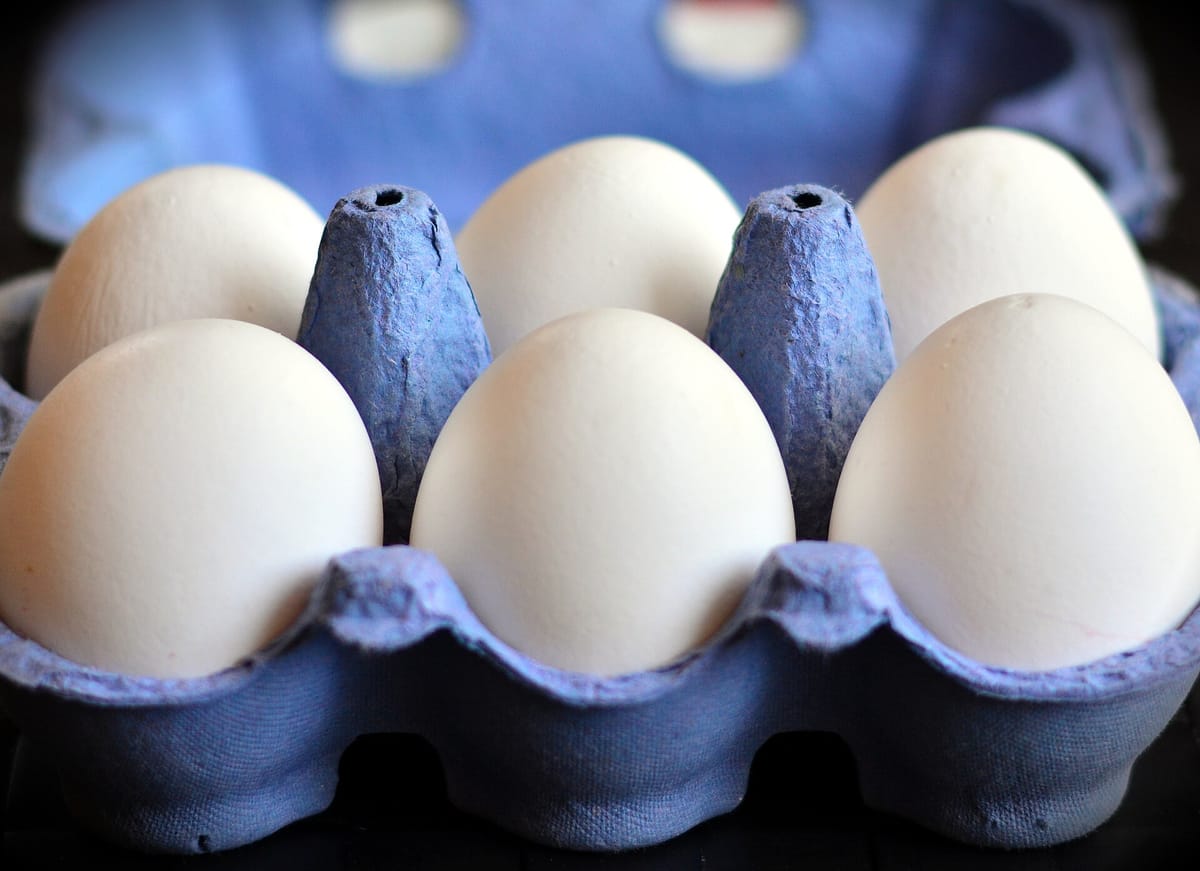
How long do eggs last in the fridge? Raw eggs in their shells keep for three to five weeks from the day you put them in, provided the fridge runs at 4C (40F) or below. The date printed on the box is the better guide, but it counts from a different starting point depending on whether the eggs were packed in the UK or the US.
Key takeaways
- Raw eggs in the shell keep 3 to 5 weeks in a fridge at 4C or colder.
- UK eggs carry a best before date no more than 28 days after they were laid.
- US cartons carry a pack date as a three-digit day-of-year number, plus a sell-by or best-by date.
- The float test tells you how old an egg is, not whether it is safe.
- Hard boiled eggs keep one week. Cooked egg dishes keep three to four days.
Why storage country changes the answer
In the US, eggs are washed and sanitised before they reach the shop. Washing strips the cuticle, the thin natural coating that seals the pores of the shell. Without it the shell is easier for bacteria to cross, so US eggs are refrigerated from the packing plant onwards. The FDA's egg safety guidance tells you to store them at 40F or below and use them within three weeks for best quality.
In the UK and most of Europe, Class A eggs must not be washed, so the cuticle stays on. Shops sell them unrefrigerated. Eggs under the British Lion scheme come from hens vaccinated against salmonella, which is why UK guidance is relaxed about the shelf. Relaxed is not the same as indifferent, though. The Food Standards Agency still recommends the fridge at home, because a steady cold temperature keeps an egg in good condition far longer than a warm kitchen does.
Once an egg has been refrigerated, keep it refrigerated. A cold egg brought into a warm room sweats, and that surface moisture helps bacteria move through the shell.
How to read the date on the box
The number on the box is the fastest way to answer the question, as long as you know what it measures.
UK eggs
UK eggs have a best before date, usually printed on both the box and the shell. It is set no more than 28 days after the egg was laid. Food Standards Scotland says eggs can be eaten a day or two after that date, as long as they are cooked thoroughly, for example hard boiled or baked into a cake. The reason is that any salmonella present can multiply to unsafe levels after the date, and full cooking kills it.
The code stamped on the shell next to the date tells you the farming method and the country. It does not change how long the egg keeps.
US eggs
A carton bearing the USDA grade shield must show the pack date. It is printed as a three-digit number counting the days of the year, so 001 is 1 January and 365 is 31 December. A carton stamped 258 was packed on 15 September in a non-leap year.
Most cartons also carry a sell-by or expiration date. Under USDA rules that date can be no more than 30 days after the pack date. A best-by date, where one is used, can be up to 45 days after it. Eggs are usually still good for three to five weeks after you buy them, so a sell-by date passing in your fridge is not a reason to throw them out.
How to test an egg you are unsure of
If the box has gone and you do not know how old the eggs are, work through these steps in order.
- Look at the shell. Throw out any egg that is cracked, slimy or powdery. A crack is a route in for bacteria, whatever the age.
- Try the float test. Fill a bowl with cold water and lower the egg in gently.
- It lies flat on the bottom: it is fresh.
- It stands upright on the bottom: it is a few weeks old and fine for baking or hard boiling.
- It floats: it is old. Crack it separately before deciding.
- Crack it into a separate bowl. Never straight into the mixing bowl, where one bad egg spoils the rest.
- Smell it. A bad egg smells of sulphur the moment it opens. There is no mistaking it. If you are in doubt, throw it out.
- Check the white. A fresh egg has a thick white that holds close to the yolk. An older egg spreads thin and watery across the bowl. That is a quality change, not a safety one, but it makes poached and fried eggs untidy.
The float test works because an egg loses moisture through its shell as it ages, and air takes its place in the pocket at the wide end. The bigger the pocket, the more the egg floats. The Egg Safety Center is clear that a floating egg is older but may be perfectly safe, and a sinking one is not guaranteed safe either. Treat the test as a clock, not a safety check.
Common mistakes that shorten egg life
- Storing eggs in the fridge door. The door warms every time it opens. Repeated warming and cooling puts condensation on the shells. Keep eggs on a middle shelf.
- Taking them out of the carton. The carton blocks smells from other food, slows moisture loss and keeps the date with the eggs. Egg trays in the door throw all three away.
- Washing eggs before storing. On UK and farm-fresh eggs this removes the cuticle. Wipe off dirt with a dry cloth, and wash only just before cooking if you must.
- Leaving cooked eggs out. Cooked eggs and egg dishes should not sit at room temperature for more than two hours, or one hour on a day above 32C (90F).
- Moving eggs between cold and warm. Taking a box out for a baking session and putting it back causes the same sweating as the fridge door. Take out only the eggs you need.
How long do eggs last in the fridge, by type
Raw eggs are only part of the answer. The table covers the forms most kitchens end up with.
| Egg | Where | How long it keeps | Source of the figure |
|---|---|---|---|
| Raw, in shell, UK | Fridge | Up to the best before date, 28 days from lay at most | Lion code, FSA |
| Raw, in shell, US | Fridge at 40F or below | 3 weeks for best quality, 3 to 5 weeks from purchase | FDA, USDA |
| Hard boiled, shell on or off | Fridge | 1 week | FDA |
| Cooked egg dishes | Fridge | 3 to 4 days | FDA |
| Beaten whole egg or whites | Freezer | Up to 1 year | FDA |
| Raw, in shell | Freezer | Do not freeze | FDA |
Older eggs are not worse for every job. Hard boiled eggs a week or two old peel far more easily than fresh ones, because the membrane has loosened from the shell. Very fresh eggs are best poached or fried, where the firm white holds its shape. If you cook them in cast iron, a properly seasoned skillet stops the white sticking without extra oil.
Where eggs sit in a well-run fridge
A middle or lower shelf at the back is the coldest, steadiest spot, away from the door and from raw meat. Give the carton its own place rather than stacking other food on it. Eggs take up odours through the shell, so keep them away from cut onions, strong cheese and fish.
If you are reorganising food storage generally, eggs belong in the same thinking as anything else that ages in the kitchen. Some foods keep better out of the fridge entirely, and potatoes are the obvious example: our guide to storing potatoes so they do not sprout covers why a cool, dark cupboard beats a cold shelf for them.
We check food storage figures against the agencies that set them, and we update posts when that guidance changes. Our editorial standards page sets out how.
Frequently asked questions
Can you eat eggs after the best before date?
In the UK, the Food Standards Agency says eggs can be eaten a day or two after the best before date if they are cooked until the white and yolk are both solid, or baked into something like a cake. Past that, or for runny and raw uses, throw them out.
Does the egg float test show whether an egg is safe?
No. It shows age. The air pocket inside an egg grows as moisture escapes through the shell, so older eggs tilt upright and eventually float. A floating egg is old but may be fine. A sinking egg can still carry bacteria. Crack it into a separate bowl and check the smell.
How long do hard boiled eggs last in the fridge?
One week, whether the shell is on or off, according to the FDA. Refrigerate them within two hours of cooking. Peeled eggs dry out faster, so keep them in a covered container. Cooked egg dishes such as quiche or frittata keep three to four days.
Should eggs be stored in the fridge door?
No. The door warms up every time it opens, and repeated warming and cooling puts condensation on the shells. Keep eggs in their original carton on a shelf in the main body of the fridge, where the temperature holds steady.
Can you freeze eggs?
Yes, but never in the shell, because the contents expand and crack it. Beat the yolks and whites together, or freeze whites on their own, in a labelled airtight container. The FDA says to use frozen eggs within a year. Thaw them overnight in the fridge before cooking.


