
How to Care for a Poinsettia So It Lasts Past Christmas
Most poinsettias are lost to a cold trip home, a foil sleeve full of water or a spot by a draft. Avoid those three and one stays colourful well into the new year.
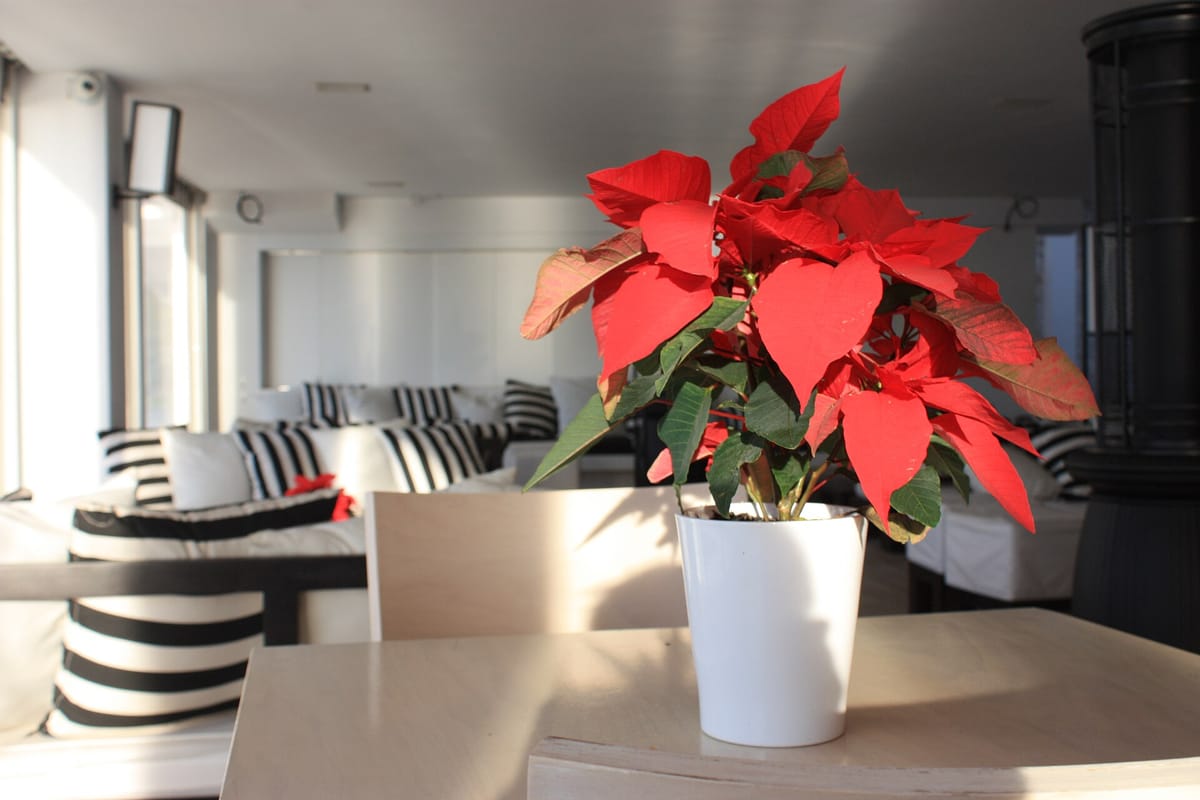
How to care for a poinsettia comes down to three things most plants never get. A warm trip home, compost that drains, and a bright spot away from drafts. Poinsettias come from warm parts of Central America and are grown in heated greenhouses. Three things finish most of them. A few minutes below 50°F (10°C) on the way home, a foil sleeve holding water around the roots, or a spot next to the front door. Avoid those, water only when the compost is dry, and a poinsettia stays bright well into January.
Key takeaways
- Keep it at ordinary room temperature, 60 to 70°F (16 to 21°C), and never below 50°F (10°C).
- Wrap it for the trip home, even a short walk to the car.
- Remove the foil sleeve, or punch holes in its base, so water can drain.
- Water only when the top of the compost is dry, then empty the saucer.
- Give it bright, indirect light, but keep the leaves off cold glass and away from heaters and doors.
Why poinsettias die so fast
Poinsettias are tropical plants sold in midwinter, which is the root of the trouble. University of Delaware Extension notes that they come from tropical Latin America. They are grown in greenhouses at 60 to 70°F (16 to 21°C). Temperatures below 50°F (10°C) damage the plant, and cool, wet compost encourages root rot.
A typical trip home puts it through all of that. A cold car park, a sleeve that holds water, then a windowsill that drops sharply at night. The plant looks fine for a few days. Then the leaves yellow and fall, and it is easy to assume it was a weak plant. Usually it was the first week.
Choosing a healthy plant
- Look at the true flowers. The small yellow-green buds in the centre of the coloured bracts are the actual flowers. Tight, fresh ones mean the plant is early in its display. Shed or shrivelled ones mean it is past its best.
- Check the leaves. Plenty of green leaves right down the stems, with no yellowing or wilting.
- Avoid plants crammed together in a cold doorway display. They may already have been chilled.
- Avoid soaked compost. If the pot is heavy and the sleeve is full of water, the roots may already be suffering.
How to care for a poinsettia, step by step
- Protect it on the way home. Ask for it to be wrapped, or put it in a large bag, before you go outside. Take it straight home rather than leaving it in a cold car.
- Free it from the foil. Delaware Extension's advice is to remove the decorative foil or punch holes in its base. Poinsettia roots will not tolerate standing in water.
- Pick a bright spot. Near a sunny window, in natural, indirect light. Do not let the bracts or leaves touch the glass, which gets cold at night.
- Keep it at room temperature. Delaware Extension gives nights of 60 to 62°F (16 to 17°C) as ideal. A room you are comfortable in is about right.
- Check the compost daily with a finger. Iowa State Extension recommends watering only when the compost feels dry to the touch. Then water until it flows out of the bottom of the pot.
- Empty the saucer. If water is still in the saucer three to four hours after watering, Delaware Extension says to tip it away. Water left standing rots the roots.
- Skip the fertiliser while it is in colour. It is not growing much, and feed it cannot use only builds up in the compost.
Where to put it, and where not to
| Spot | Good or bad | Why |
|---|---|---|
| Near a bright window, leaves clear of the glass | Good | Light keeps the bracts bright |
| A windowsill behind closed curtains at night | Bad | Cold pocket of air against the glass |
| Next to the front or back door | Bad | Iowa State notes rapid temperature swings near a door cause leaf drop |
| Above or beside a radiator or heating vent | Bad | Warm, dry air blowing across it causes leaf drop |
| A dim corner as a table centrepiece | Fine for a day or two | Move it back to its window within a couple of days |
| A cold porch, conservatory or unheated hall | Bad | Below 50°F (10°C) damages it |
Poinsettia dropping leaves: what it means
| What you see | Likely cause | What to do |
|---|---|---|
| Lower leaves yellow, then fall, compost damp | Overwatering | Let it dry before watering, empty the saucer |
| Plant wilts, then drops leaves all over | Too dry | Water thoroughly, then check daily |
| Sudden leaf drop a few days after buying | A chill on the way home or a cold spot | Move it somewhere steady and warm |
| Leaves crisp and dropping near a heater | Hot, dry air | Move it away from the heat |
Iowa State Extension lists these same causes. Overwatering yellows and drops the lower leaves. A plant left too dry wilts and drops leaves. Warm air from a heater and swings in temperature near a door cause leaf drop too. Most winter houseplants react to their spot in the same way. Our guide to why houseplants drop leaves in winter covers the others on your windowsill.
Mistakes that shorten its life
- Leaving it in the foil. The sleeve looks festive and holds a pool of water around the roots. Take the plant out to water it in the sink, let it drain, then put it back.
- Watering on a schedule. A poinsettia in a cool room may go several days between drinks. Check the compost first, as with any houseplant.
- Standing it next to the Christmas tree by the fire. Both suffer from the heat. Our guide to keeping a real Christmas tree alive has the same advice about heaters and radiators.
- Buying it weeks before you need it. The colour lasts weeks with good care, not months. Buy close to when you want it at its best.
After Christmas
Once the bracts fade and drop, most people compost the plant. Keeping it is possible, and it grows on as an ordinary green houseplant. Getting the colour back is the hard part. Delaware Extension notes that flower development depends on light. That is why it is hard for a homeowner to bring a poinsettia back into colour the next year. If you want to try, keep it watered and in good light through spring and summer, and treat any red that returns as a bonus.
Frequently asked questions
How often should you water a poinsettia?
Only when the top of the compost feels dry to the touch, which may be every few days in a warm room. Water until it runs out of the bottom of the pot, then tip away whatever collects in the saucer or foil. Iowa State Extension notes that both soggy and bone-dry compost make poinsettias drop leaves.
Why is my poinsettia dropping its leaves?
Usually water or temperature. Yellow lower leaves that fall are a sign of overwatering. A plant that wilts and then drops leaves has been allowed to dry out. Sudden drop can also follow a cold draft, warm dry air from a heater, or the swing in temperature near a door that opens often.
What temperature does a poinsettia need?
Ordinary room temperature suits it. University of Delaware Extension says poinsettias are grown at 60 to 70°F (16 to 21°C), with nights ideally around 60 to 62°F (16 to 17°C). Anything below 50°F (10°C) damages the plant, so keep it off cold windowsills and out of cold cars.
Can I keep a poinsettia to flower again next year?
You can keep it as a green houseplant, but getting the coloured bracts back is hard at home. Delaware Extension notes that flower development depends on light, which is why reblooming is difficult for a homeowner. Most people enjoy it for the season and compost it.


