
How Often to Water Houseplants, and How to Tell
Water on a schedule and you will kill something. Check on a schedule and water on what you find.
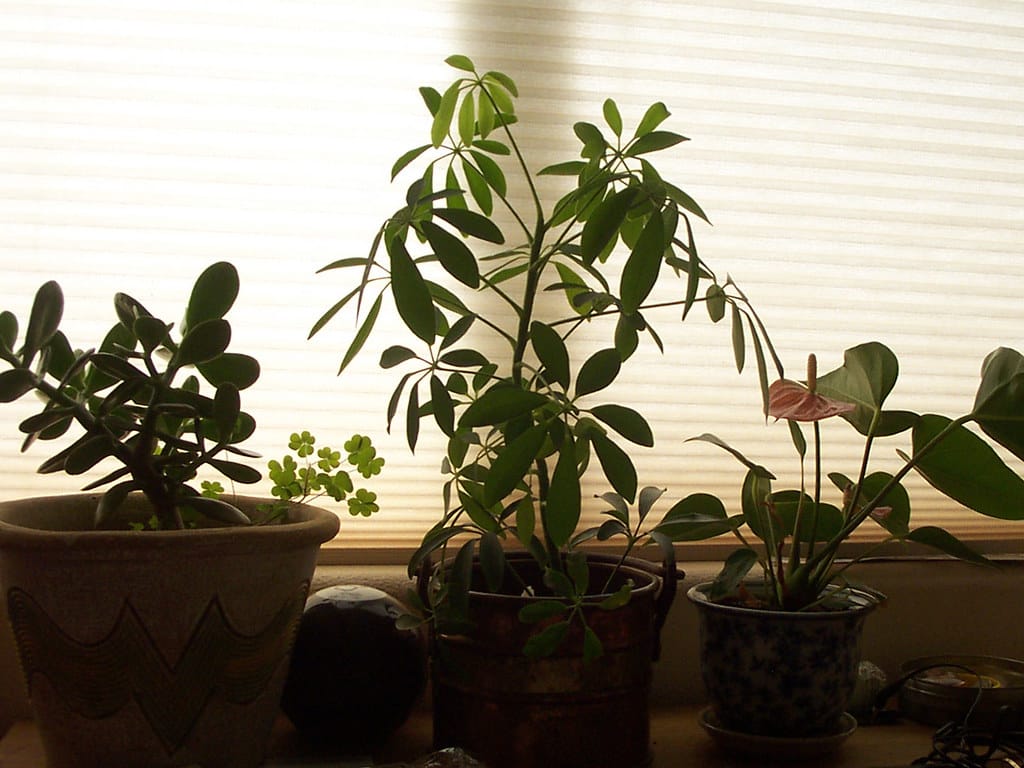
Asking how often to water houseplants gets you a number that is wrong most of the year. The same plant might need water twice a week in July and once a fortnight in December. The reliable method is to check on a schedule and water on what you find: push a finger into the compost, and water only when the top inch or two is dry.
Key takeaways
- Check twice a week. Water only when the top inch or two of compost is dry.
- More houseplants die from too much water than too little.
- A plant wilting in wet compost has root rot, not thirst. Watering it again finishes it.
- Water until it runs from the drainage holes, then empty the saucer.
- Light and pot type change how fast a plant drinks more than the species does.
Why a schedule kills plants
A plant drinks at the rate it is growing, and growth follows light and warmth. In midsummer a pot on a bright sill can dry out in three days. In December the same pot can stay damp for a fortnight, with weak light and almost no growth.
Watering every Sunday regardless keeps the compost wet through the months when the plant is not using it. Clemson's extension service is blunt about the result. Overwatering is the main cause of death of potted plants, and it says there is no single answer on frequency because species, pot, light and season all move it.
Wet compost holds no air, and roots need oxygen. They suffocate and then rot. A plant with rotted roots cannot take up water, however much you give it.
How often to water houseplants, in practice
- Push a finger into the compost to the first knuckle, away from the stem.
- Dry at your fingertip means water. Damp means wait and check again in two days.
- For a big pot, go deeper. The top of a large pot dries long before the root ball does.
- For succulents and cacti, wait longer still. Let the compost dry most of the way through, not just at the top.
Lifting the pot works as well once you know it. A dry pot is noticeably lighter, and the difference is easy to feel after a week or two of paying attention.
Watering properly when you do
Half-watering is its own problem. A splash wets the top inch and leaves the root ball dry underneath, so the plant is drought-stressed in compost that looks watered.
- Water until it runs out of the drainage holes. That wets the whole root ball and flushes accumulated fertiliser salts.
- Empty the saucer after twenty minutes. A pot standing in water stays saturated, which is the fastest way to rot.
- Water the compost, not the leaves. Wet foliage in a cool room invites fungal spotting.
- Use room-temperature water. Cold water straight from the tap shocks tropical roots.
Sometimes water runs straight down the sides and out. That means the compost has dried and shrunk away from the edges. Stand the pot in a few inches of water for half an hour to rehydrate it from below, then drain it.
Telling thirst from rot
These look similar and want opposite treatment, which is why overwatered plants often get watered again.
| What you see | Compost is | Cause | Do this |
|---|---|---|---|
| Wilting, leaves limp | Dry | Thirst | Water thoroughly, drain |
| Wilting, leaves limp | Wet | Root rot | Stop watering, check roots |
| Lower leaves yellowing | Wet for days | Too much water | Let it dry right out |
| Leaf edges brown and crisp | Dry | Under-watering or dry air | Water, group plants together |
| Small flies around the pot | Constantly damp | Fungus gnats in wet compost | Let the top dry between waterings |
| White crust on the surface | Either | Fertiliser salts | Flush thoroughly, drain |
To check roots, slide the plant out of the pot. Healthy roots are firm, pale and fringed with fine feeder roots. Rotted ones are brown, soft, and come away in your fingers. Cut those off, repot into fresh dry compost, and water lightly until new growth appears.
What changes how fast a pot dries
- Light. The strongest influence. A plant in a bright window drinks several times faster than the same plant in a corner.
- Pot material. Terracotta breathes and dries fast. Plastic and glazed ceramic hold water far longer.
- Pot size. An oversized pot holds more wet compost than the roots can use, which is a common cause of rot after repotting.
- Season. Shorter days mean slower growth means less water, every year.
- Heating. Dry air pulls moisture from leaves while the compost stays wet, so a plant can want humidity and not water.
Humidity is a separate question
Most houseplants do best between 40 and 60 percent relative humidity. Central heating in winter pushes indoor air well below that, which is why tropical foliage crisps at the edges in January while its compost is still damp.
Grouping plants together works better than misting, which raises humidity for a few minutes at most. A tray of pebbles and water under the pots helps, as long as the pot base sits above the water rather than in it.
Very high indoor humidity is a different problem entirely. If a room is damp enough that the walls feel cold and clammy, our guide to tracing a musty smell in the house covers finding the source.
Outdoor pots follow the opposite rule in autumn. The risk there is waterlogging and freezing rather than drying out, and our guide to preparing garden beds for winter covers moving and protecting containers before the first hard frost.
Frequently asked questions
How often should I water my houseplants?
There is no fixed interval that works. The same plant needs water twice a week in July and once a fortnight in December, because light, temperature and growth all change. Check the top inch or two of compost twice a week and water only when it is dry.
How do I know if I have overwatered a plant?
Yellowing lower leaves, compost that stays wet for days, fungus gnats, and a plant that wilts despite damp soil. That last one catches people out. A wilted plant in wet compost has lost roots to rot and cannot drink, so more water makes it worse.
What does root rot look like?
Slide the plant out of its pot and look. Healthy roots are firm, pale and covered in fine feeder roots. Rotted roots are brown or reddish, soft, and come away when you touch them. Cut the dead ones off, repot into fresh dry compost, and water sparingly.
Should I use a moisture meter?
A finger works as well and costs nothing. Push it in to the first knuckle. Cheap meters read conductivity rather than water and drift badly in compost with fertiliser in it, so they often say wet when the pot is dry.
Does humidity matter as much as watering?
It matters for tropical foliage plants, less for succulents. Most plants do best between 40 and 60 percent relative humidity, which is hard to hold indoors in winter with heating on. Grouping plants together raises local humidity more reliably than misting does.

